
The experience at a glance
Few places on earth bring together whale sharks, humpback whales, manta rays, and dugongs in a single stretch of coastline — and fewer still let you swim with all of them. Read on to discover why Ningaloo belongs at the top of any serious ocean traveler’s list.
The Why
1. Whale Sharks Arrive Here in Numbers Seen Almost Nowhere Else
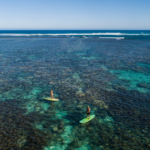
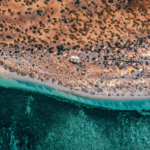
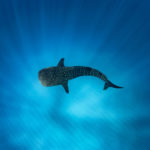
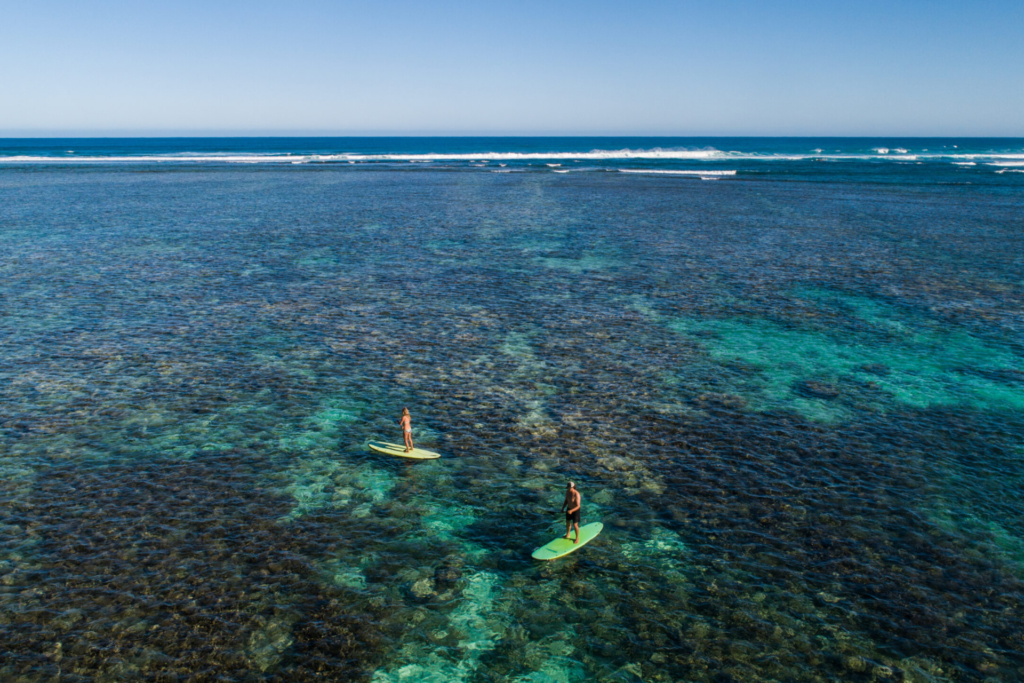
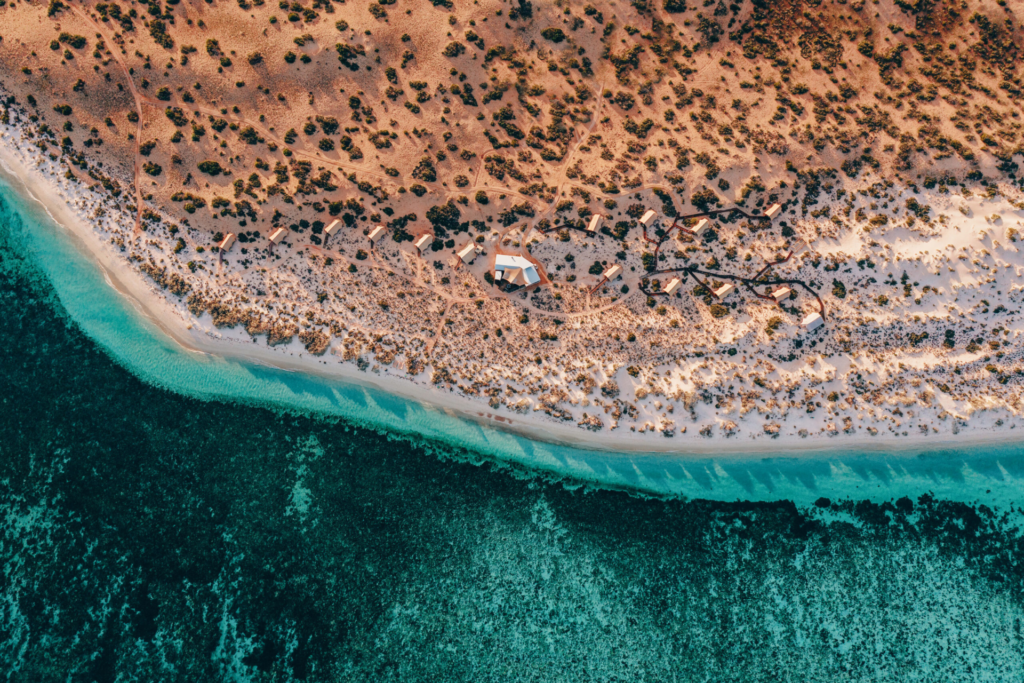
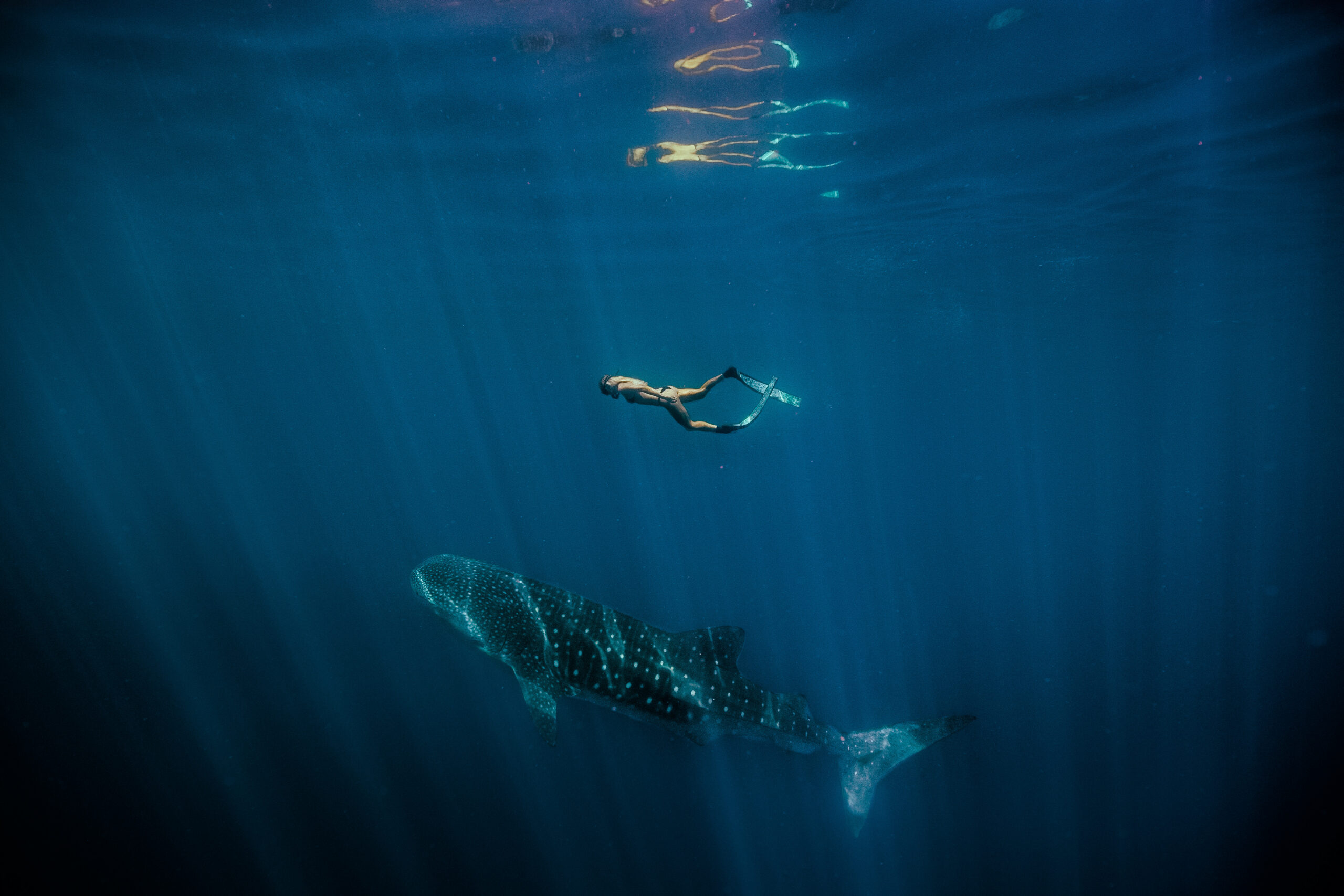
Where is the best place in the world to swim with whale sharks? Between March and July, almost nowhere is more reliable than Ningaloo Reef, off Australia’s wild northwest coast. One of the planet’s largest fringing reefs stretches nearly two hundred miles along the Indian Ocean — and unlike most reefs, parts of it sit just offshore, close enough to wade out from the beach.
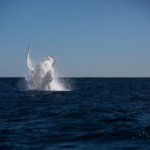
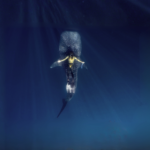
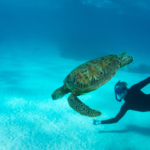
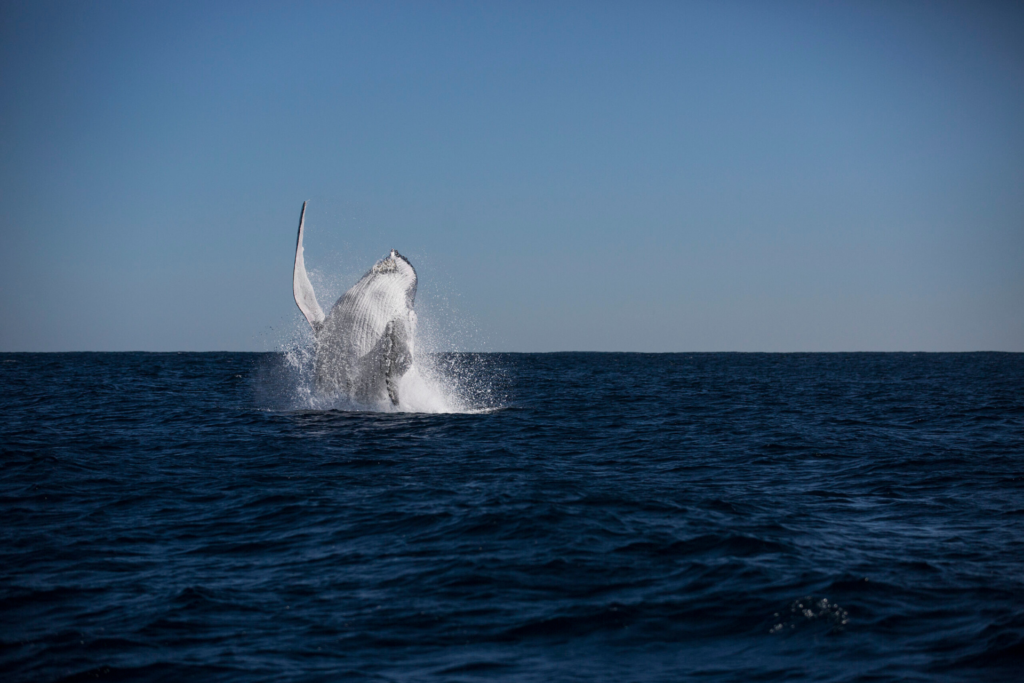
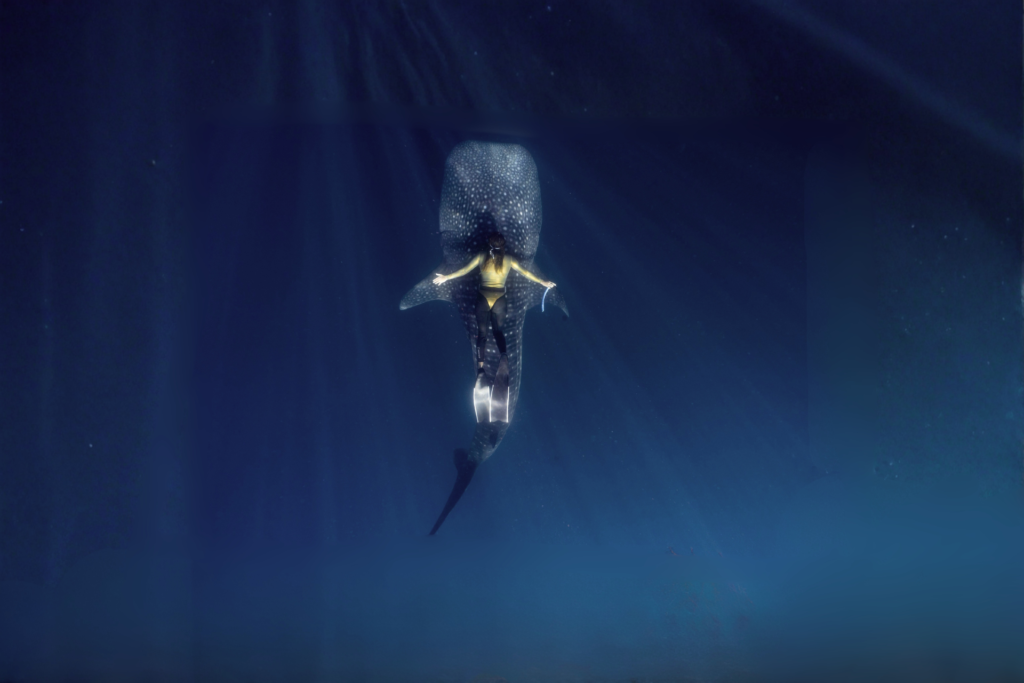
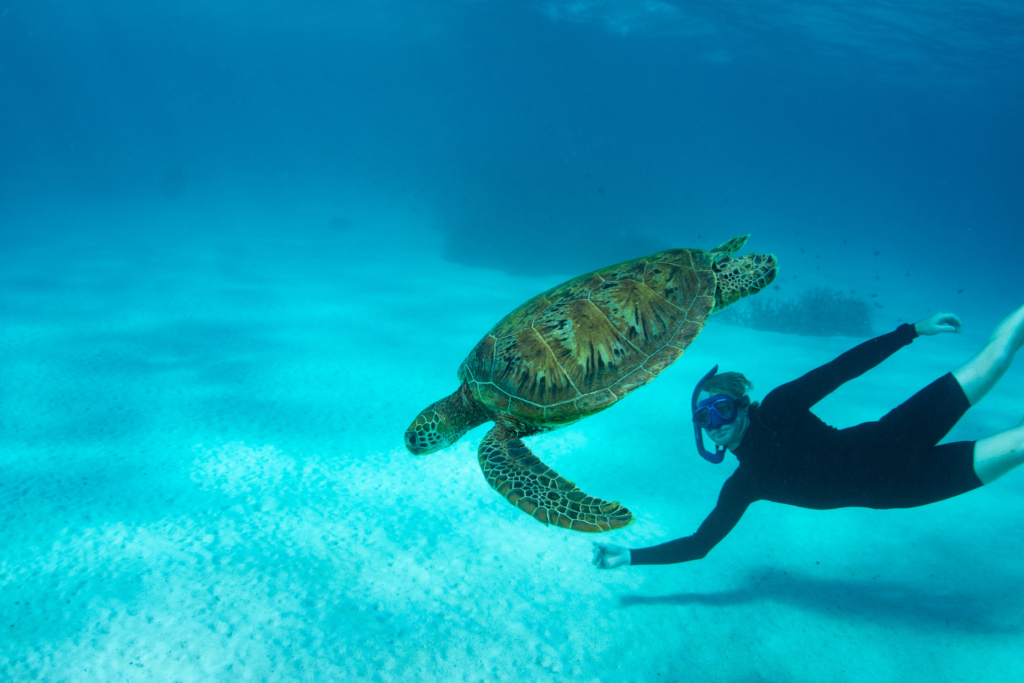
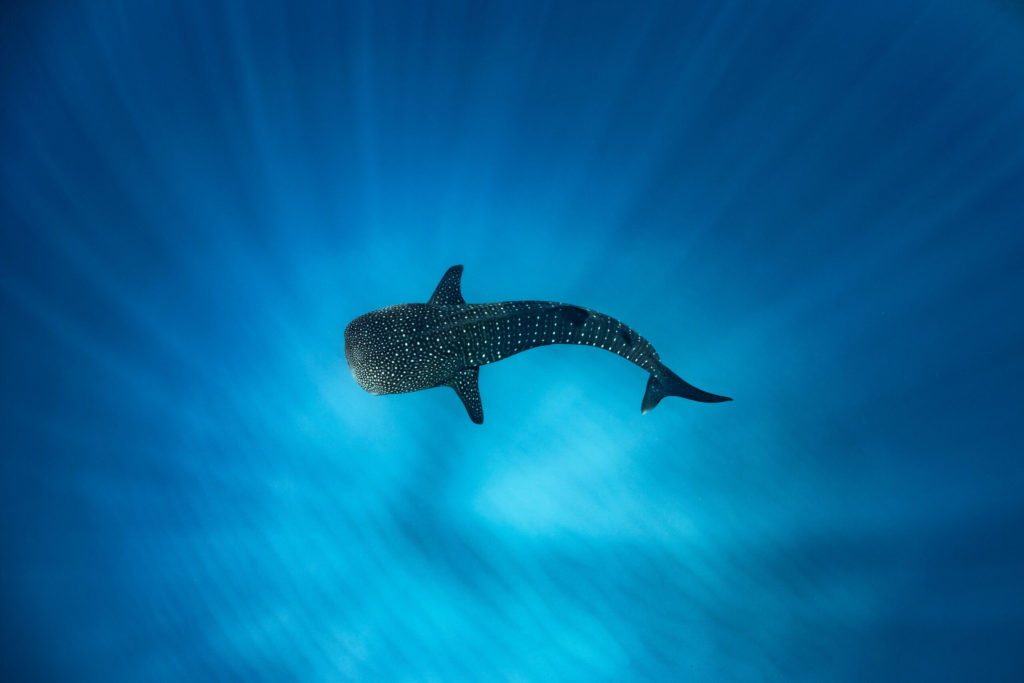
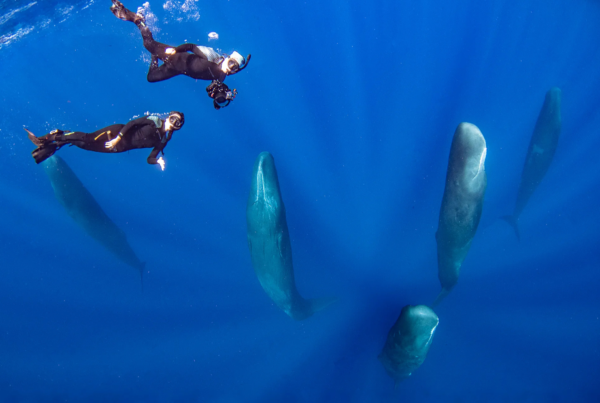
This is one of the great marine corridors on earth. Each year, ocean currents and seasonal plankton blooms draw an extraordinary cast of species to this single stretch of coast. The largest fish in the ocean — the whale shark, reaching upwards of forty feet — arrives in answer to the bloom, gliding through the shallows in numbers seen almost nowhere else on the planet. From July through October, humpback whales follow, traveling thousands of miles along their southern migration to calve in warm waters within sight of the dunes. Manta rays, dugongs, and sea turtles drift through the channels and seagrass meadows year-round.
There are reefs elsewhere in the world that offer one such encounter and call themselves world-class. Ningaloo offers ALL of them — sometimes in a single afternoon.
The most rewarding way in is by boat. A marine biologist joins every excursion, and a small spotter plane circles overhead, tracing the line of the drop-off and radioing down the position of whale sharks moving in the blue below. Before each entry, you’re briefed quietly on the water: how to approach, how far to keep away, how to read the body language of an animal the size of a school bus. The encounters themselves are unhurried, almost ceremonial — a few minutes at a time in the water as the shark passes through its own ancient world.
2. Sal Salis Is the Only Place to Stay Inside Cape Range National Park
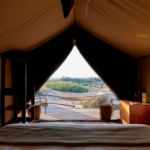
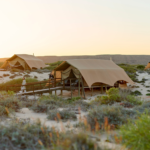
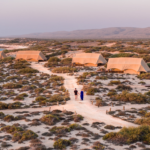
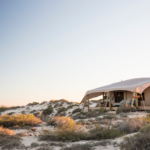
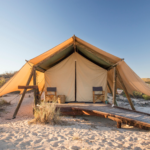
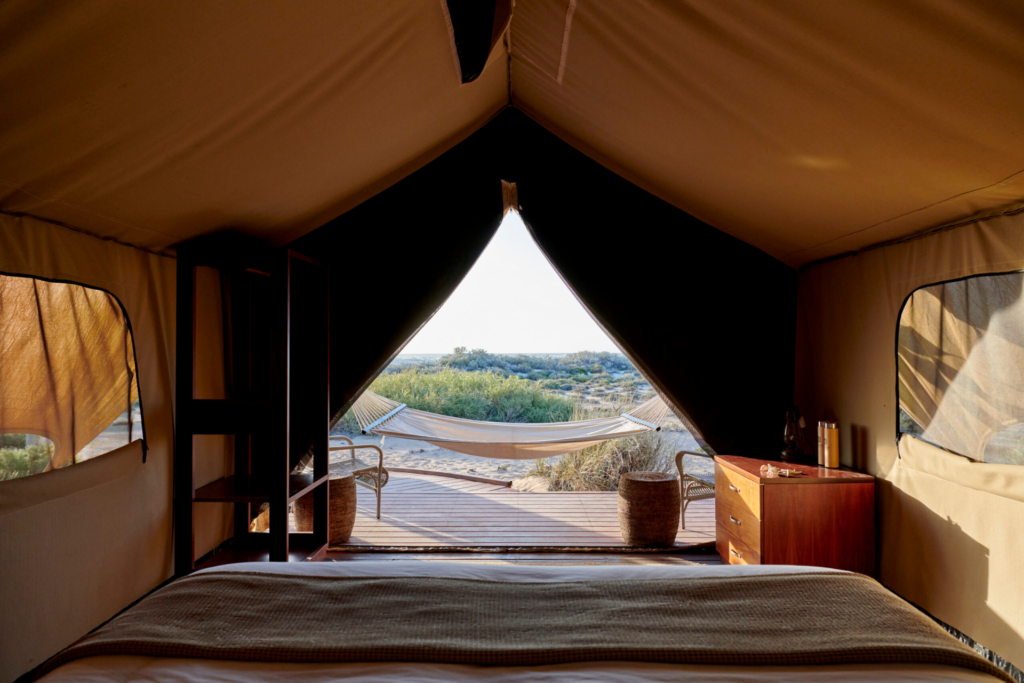
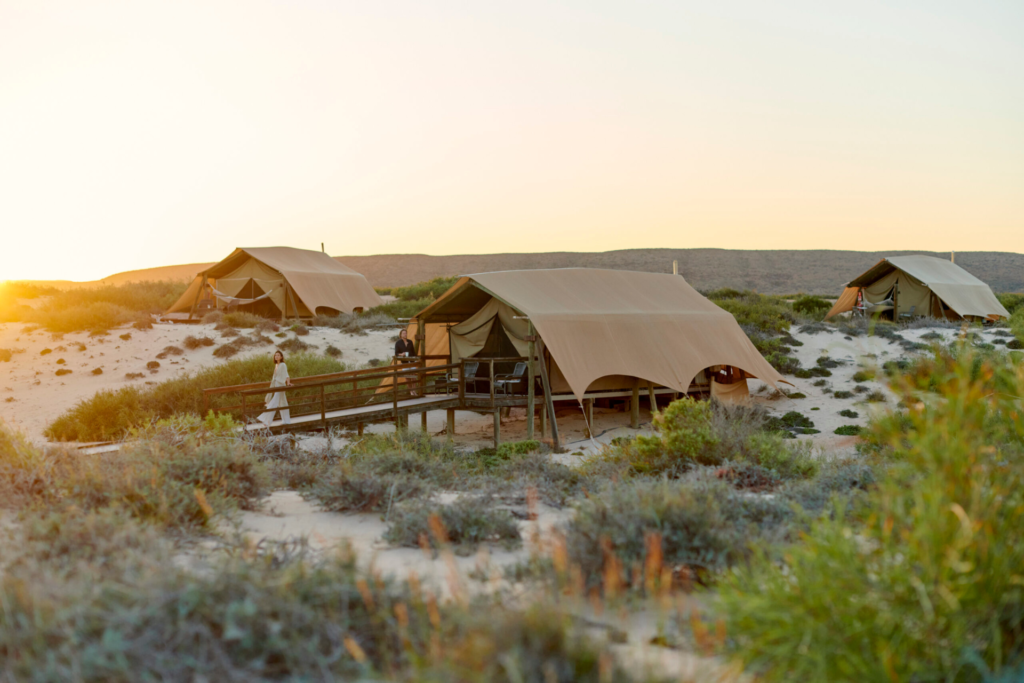
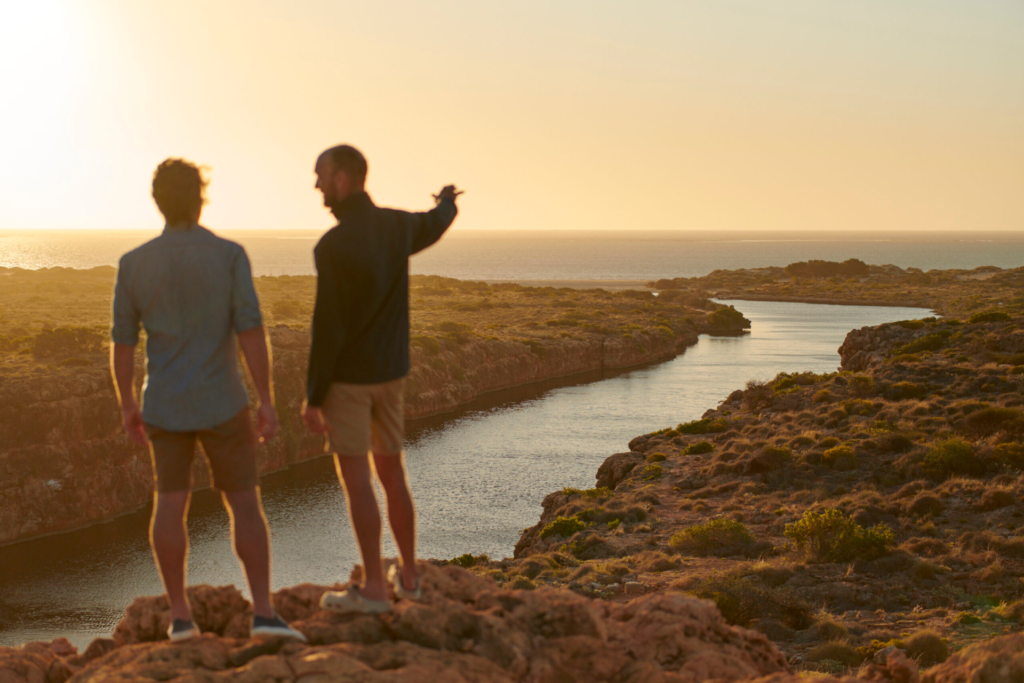
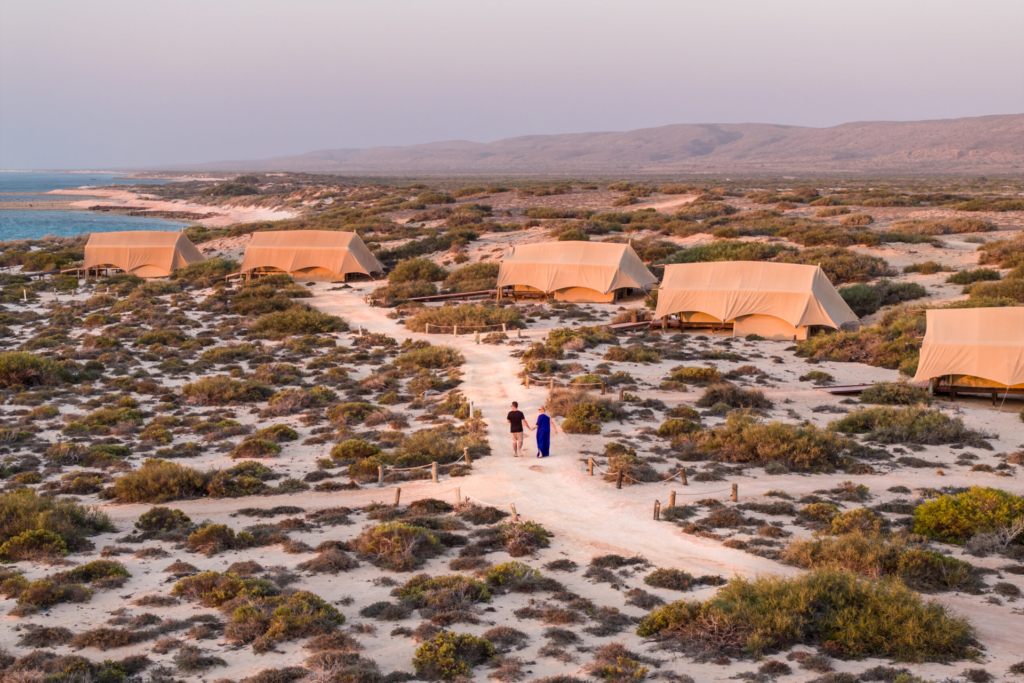
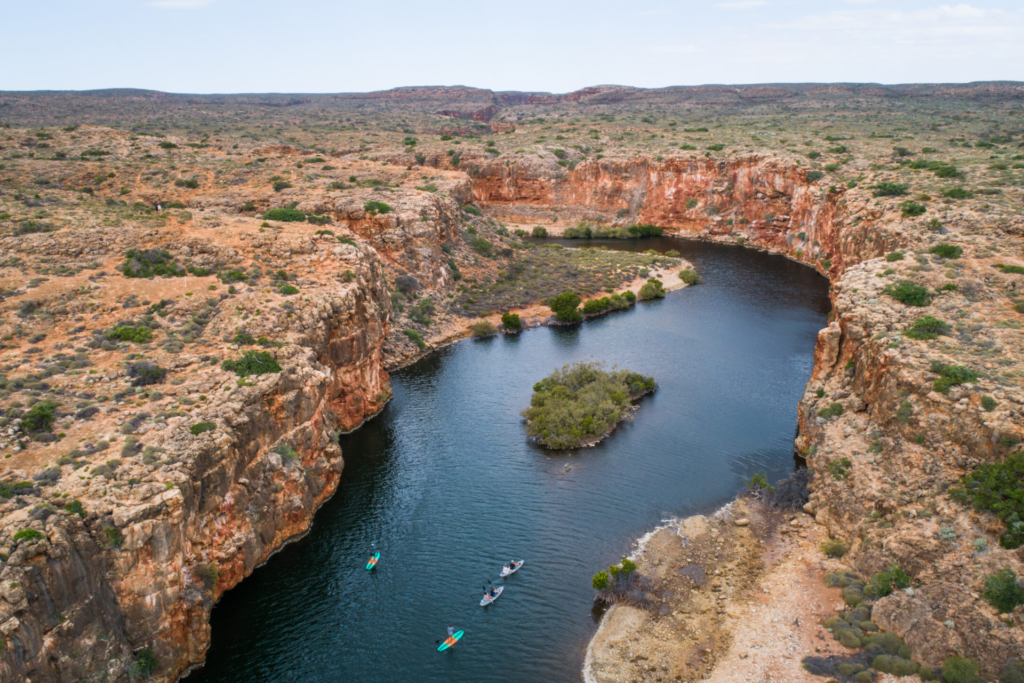
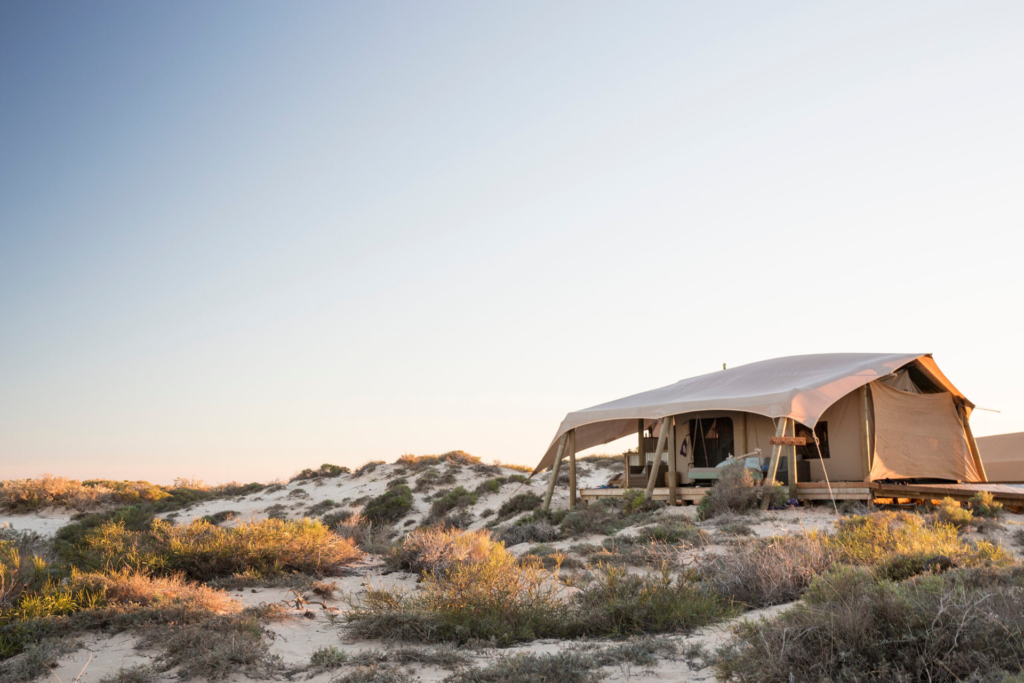
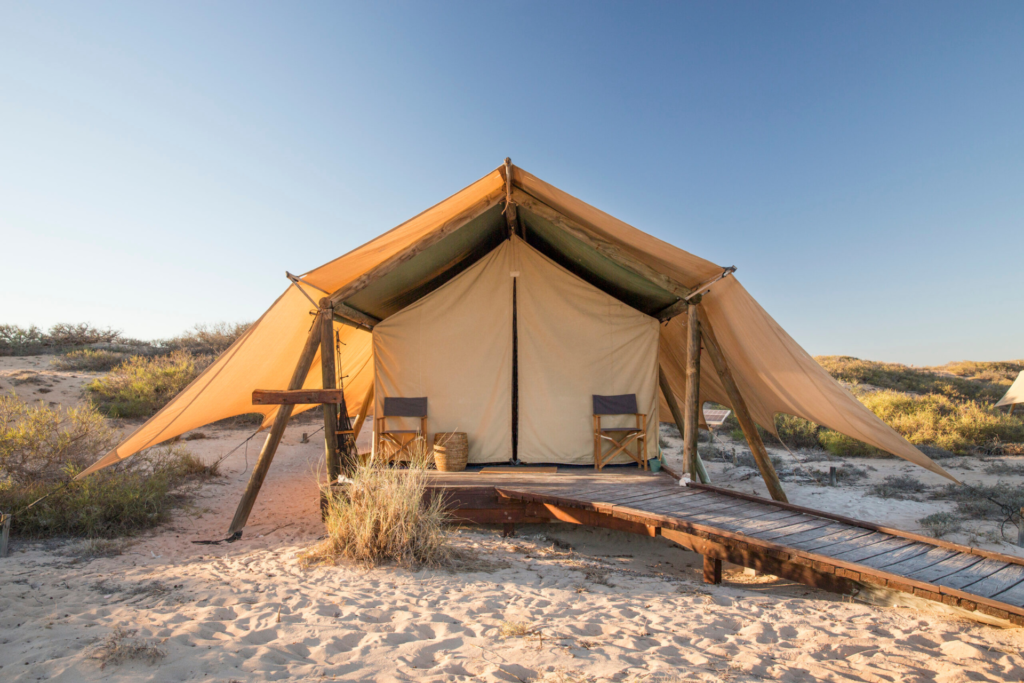
A base for all of this is Sal Salis — nine wild-pitched safari tents tucked into the dunes of Cape Range National Park, where the red Pilbara desert meets the turquoise edge of the Indian Ocean. There is nowhere else like it in Australia.
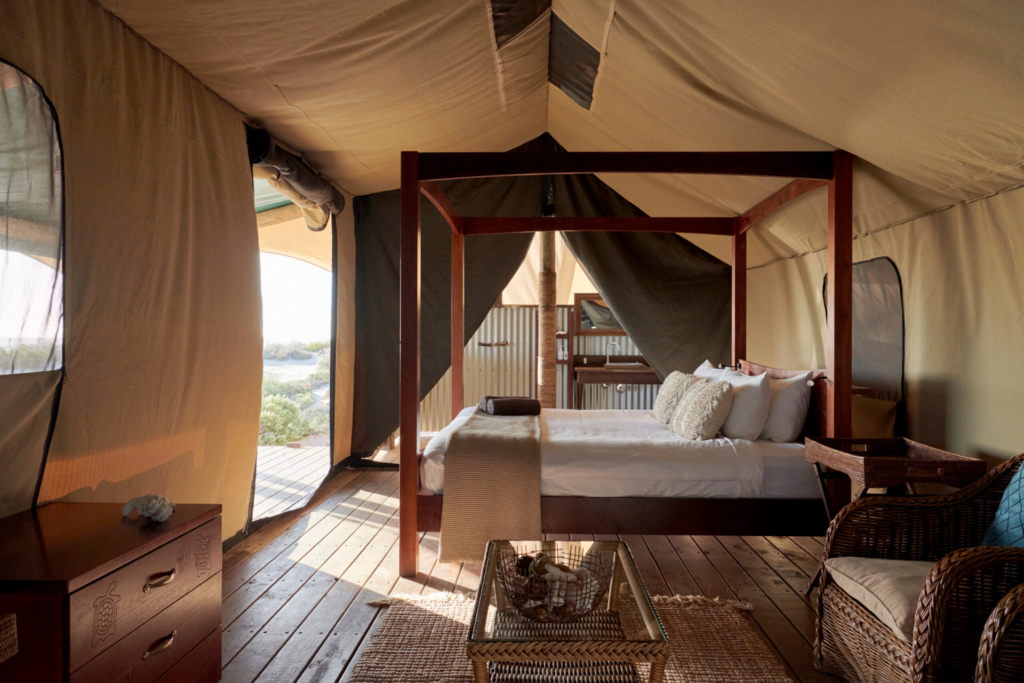
Tents are canvas, raised on timber platforms and dressed without ceremony. Power comes from the sun. There is no air-conditioning, no television, and a deliberately unreliable Wi-Fi signal.
What you get in return is the rarest commodity in modern travel: complete quiet, and the unobstructed Southern Hemisphere sky pressing down at night like something physical. Dinners unfold communally at long blackwood tables — Western Australian rock lobster, line-caught snapper, native finger lime, and wines drawn almost exclusively from Margaret River and the Swan Valley.
3. Every Encounter Is Structured Around the Long-Term Protection of Ningaloo
For the small team here, the encounter is the means rather than the end. The hope is that guests come away with a real appreciation of the reef’s role in the lifecycles of the species that move through it — and of why long-term protection of this environment matters. That conviction runs through everything: the way guides brief guests on swim protocol, the camp’s long-standing collaborations with marine scientists, and its partnership with the Yinikurtira people, the traditional custodians of the country on which it sits.