

What can travelers expect in Antarctica? A distant land with no currency, no time zone, and more ice than the human brain is really built to process — glaciers the size of small countries, emperor penguin colonies that disappear into the horizon, blue whales surfacing close enough to your zodiac that you feel the spray, light in February that turns the ice the color of a peach. A continent that holds nearly 70% of the planet’s freshwater and accounts for more than 90% of glacier area worldwide, yet has no permanent human population.
But before any of that, there is one question each voyager has to answer: how do you actually get there? Ship or land is not a logistical detail. It determines what kind of trip you have — and the options are more different than most people expect. Choose the right one for you, and Antarctica has a way of becoming the journey people spend the rest of their lives measuring everything else against.
1. How Do You Actually Get There? The Two Ways In
 Ship-Based Travel: The Classic Antarctic Expedition
For most travelers, Antarctica begins at the southern tip of South America. Ushuaia, Argentina — the self-styled “End of the World” — is the standard departure point: a compact, walkable town set against serrated peaks at the very bottom of Patagonia. Alternatively, a handful of itineraries leave from Punta Arenas, Chile, with slightly different routing.
From here, you sail south. What follows is the Drake Passage — two to three days across the stretch of ocean where the Atlantic, Pacific, and Southern Oceans collide, and one of the roughest crossings on Earth. At around 600 miles wide and 11,000 feet deep on average, it is also one of the most dramatic. Mean wave heights run 13–16 feet— roughly double what you’d find in the Atlantic. But the crossing itself — albatrosses wheeling overhead, the first icebergs appearing as smudges on the horizon — is the rite of passage most Antarctic veterans will tell you not to skip.
The Drake Bypass
If timing is tight, and you’d rather not cross the Drake — there is another way in. A small number of operators offer fly-sail itineraries: a two-hour flight from Punta Arenas to a runway on King George Island in the South Shetlands, where you board your ship and start the Antarctic portion of the trip the same day.
2. Should You Choose A Small Ship or A Large One?
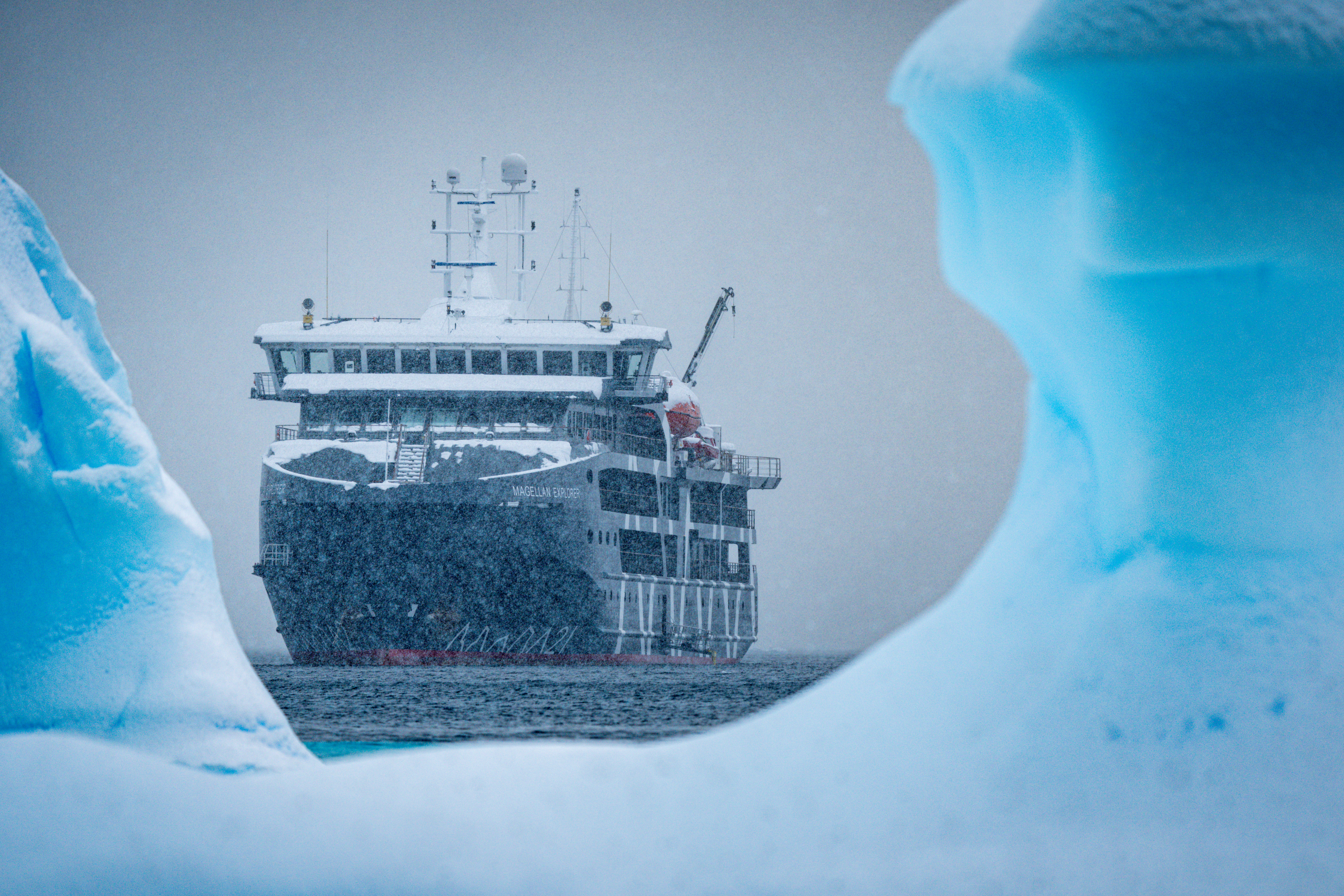 Once you’re aboard, the size of the vessel shapes everything that happens next. This is one of the most consequential decisions in Antarctic travel and most people make it on the wrong criteria.
Small expedition ships (under 100 passengers) go where the larger ones can’t. Narrower channels. Tighter iceberg passages. Zodiacs in the water faster and more often. The onboard atmosphere is closer-knit, the expedition team is in the lounge with you at night, and you spend more time actively engaged in briefings, wildlife discussions, and landing preparations.
Larger luxury ships (100–200+ passengers) trade some of that access for serious amenities: finer dining, full suites, spas, lecture theaters, far more onboard programming. The scenery is no less spectacular from a larger deck, and for travelers who want the comfort of a five-star hotel between landings, these ships are genuinely outstanding at what they do.
3. Can You Stay On Land? Antarctica’s Best Kept Secret
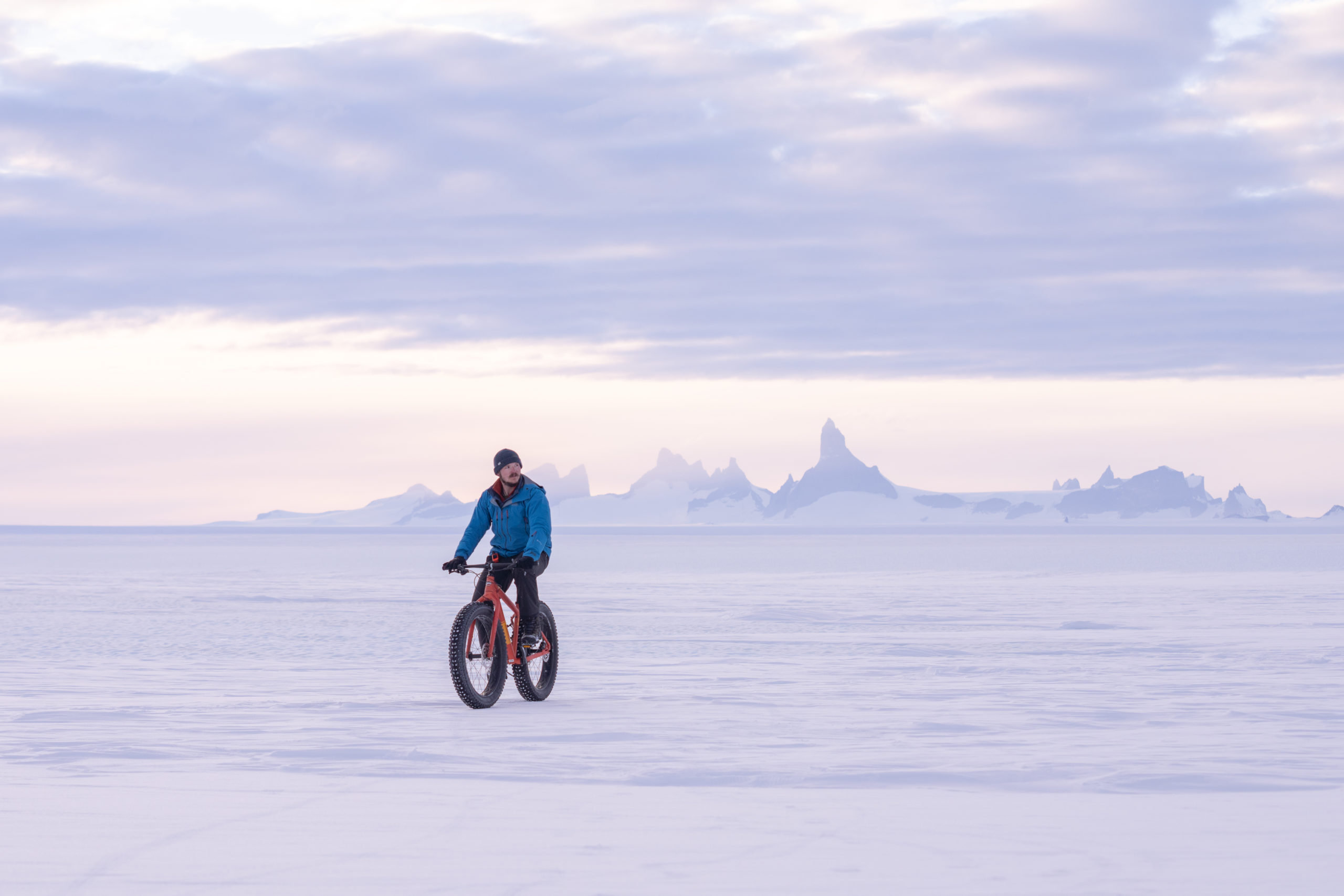 While most travelers think of Antarctica as a ship experience, there is a much smaller, much more exclusive way to see it — by land.
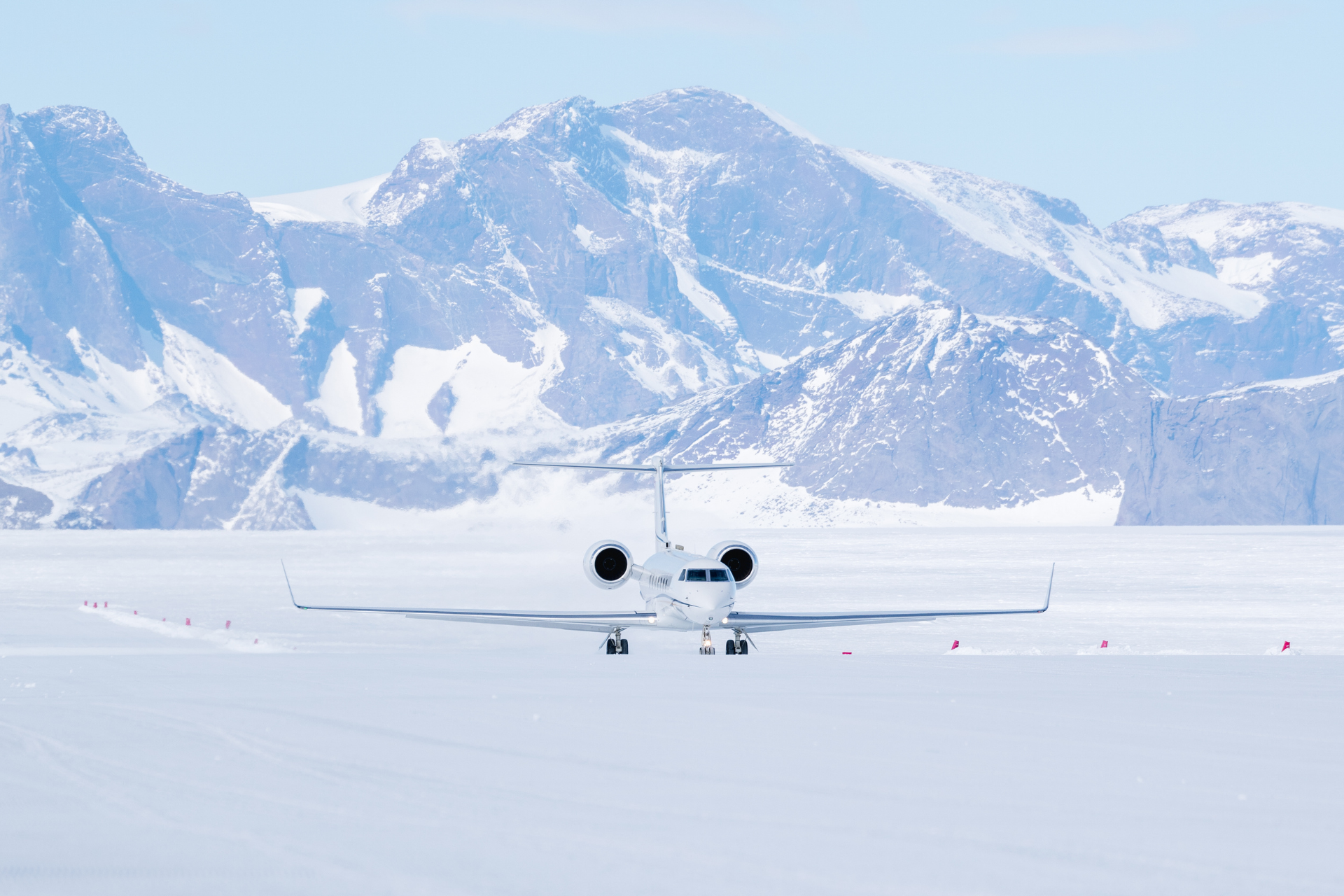
Private flights carry a handful of guests each season to a blue-ice runway on the continent itself. From there, you are based at one of the most remote luxury camps on the planet, dropped into a landscape almost no human has ever stood in. This is not glamping. The chef is Michelin-starred, the champagne is always cold, and the heated sleeping pods are designed by people who understand that comfort and proximity to the ice are not mutually exclusive.
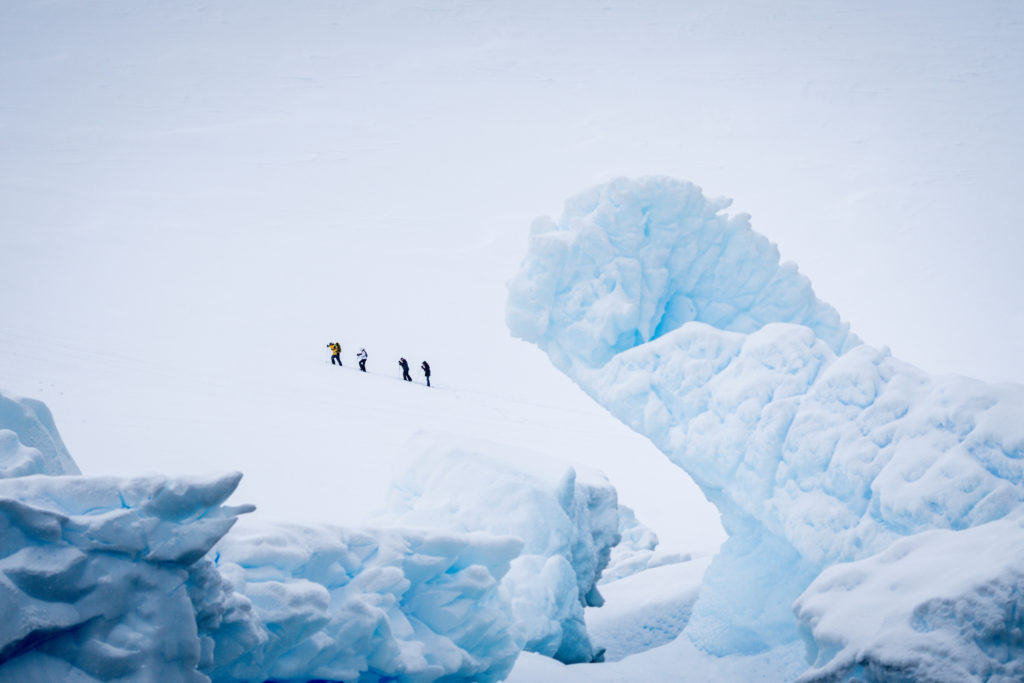
The adventures from this base are not available from any ship. Kite-skiing across an expanse of white with no visual reference points. Descending into ice caves that glow neon blue. Fat biking across the ice. Standing in front of an Emperor penguin colony — not the smaller, more common Gentoo or Chinstrap colonies you reach by zodiac, but the species you’ve seen in the documentaries, accessible only from deep in the interior. And for a small number of guests each year: an expedition to the Geographic South Pole, one of the rarest achievements left in modern travel.
4. When Should You Go?
 Antarctica’s season runs November through March — the Southern Hemisphere’s summer. Within that window, timing matters more than people expect.
November to early December is the start of the season: pristine snow, dramatic low-angle light, courtship displays at the penguin colonies. The landscape is at its most untouched.
Mid-December through January is high summer: the warmest temperatures (still well below freezing), peak wildlife activity, and long, long daylight hours. It is also the busiest period.
February and March is the quiet end of the season. The light goes golden. Penguin chicks are molting into their adult feathers. Whale activity peaks. If we had to pick a favorite window for a first-time traveler, this would be it.
One note on the Drake: it can be rough any time of year, but the shoulder months are the most unpredictable. Worth factoring in when you choose between sailing and flying.
5. What Can You Do Once There?
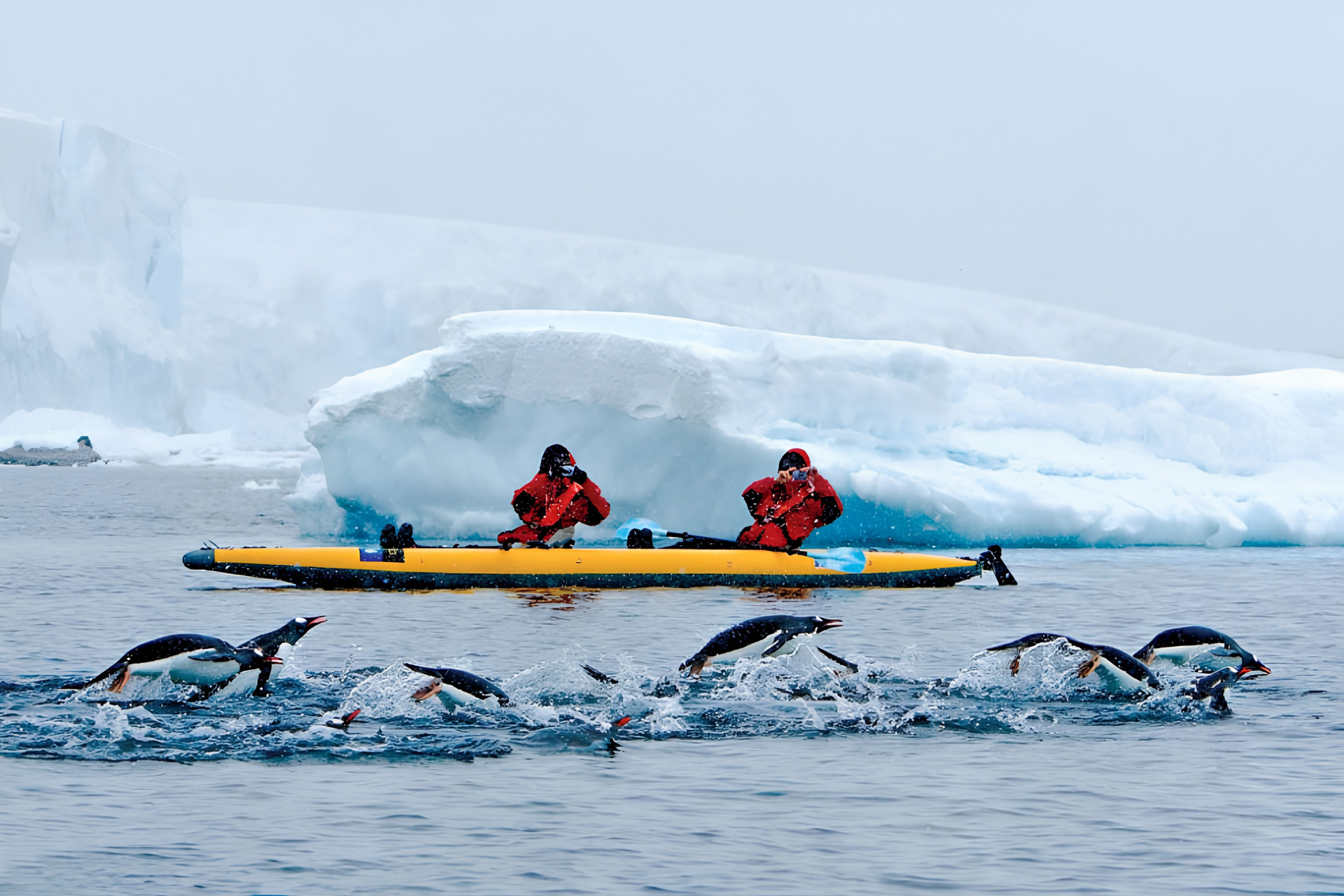 Whether you arrive by sea or by air, Antarctica does not disappoint. A few of the experiences that define a great trip:
On the water and ice. Zodiac expeditions through iceberg-choked bays. Kayaking beside calving glaciers — close enough that the cracks sound like rifle shots. Snowshoeing across ancient ice. And, if conditions cooperate, a polar plunge into the Southern Ocean: freezing, brief, and one of the things you will tell people about for the rest of your life.
With wildlife. Penguin colony walks. Humpbacks and minkes from a zodiac. Leopard seals at uncomfortably close range. From land-based camps, Emperor Penguins.
For the adventurous. Ice climbing, snowmobiling, kite-skiing, and mountaineering on peaks that have never been named, let alone summited.
For the contemplative. Antarctica is also one of the most profound places on Earth to sit still. The scale of the silence — no cities, no roads, no infrastructure within thousands of miles — is the thing most travelers come home talking about.
6. How Far in Advance Should You Plan?
 Antarctica is not a six-weeks-out trip. The best ships, the best cabins on those ships, and the land-based camps are typically booked one to two years in advance — sometimes more. The season is short, demand among serious travelers is high, and the logistics are difficult to navigate alone.
This is the kind of journey that rewards working with someone who has actually been. At The Legacy Untold, we design private Antarctic expeditions across the full range of what the continent offers — the classic small-ship voyages, the fly-sail itineraries that bypass the Drake, and the rare land-based camps deep in the interior.
Begin designing your expedition with The Legacy Untold at https://www.thelegacyuntold/travel.com or at [email protected].