

The Great Migration is one of the last great movements of wild animals on Earth. Each year, more than a million wildebeest and their entourage of zebra and gazelle move between Tanzania’s Serengeti and Kenya’s Maasai Mara in search of rain, water, and fresh grass. Predators trail the herds at every turn, turning the landscape into an unfolding drama of movement, instinct, and survival. Below, we share how to experience its most extraordinary moments, from the immense gatherings on the Serengeti plains to the charged river crossings farther north.
The Great Migration is among Africa’s most extraordinary spectacles, but seeing it well requires far more than choosing “migration season” on a calendar.
1. How Does the Great Migration Change Throughout the Year?
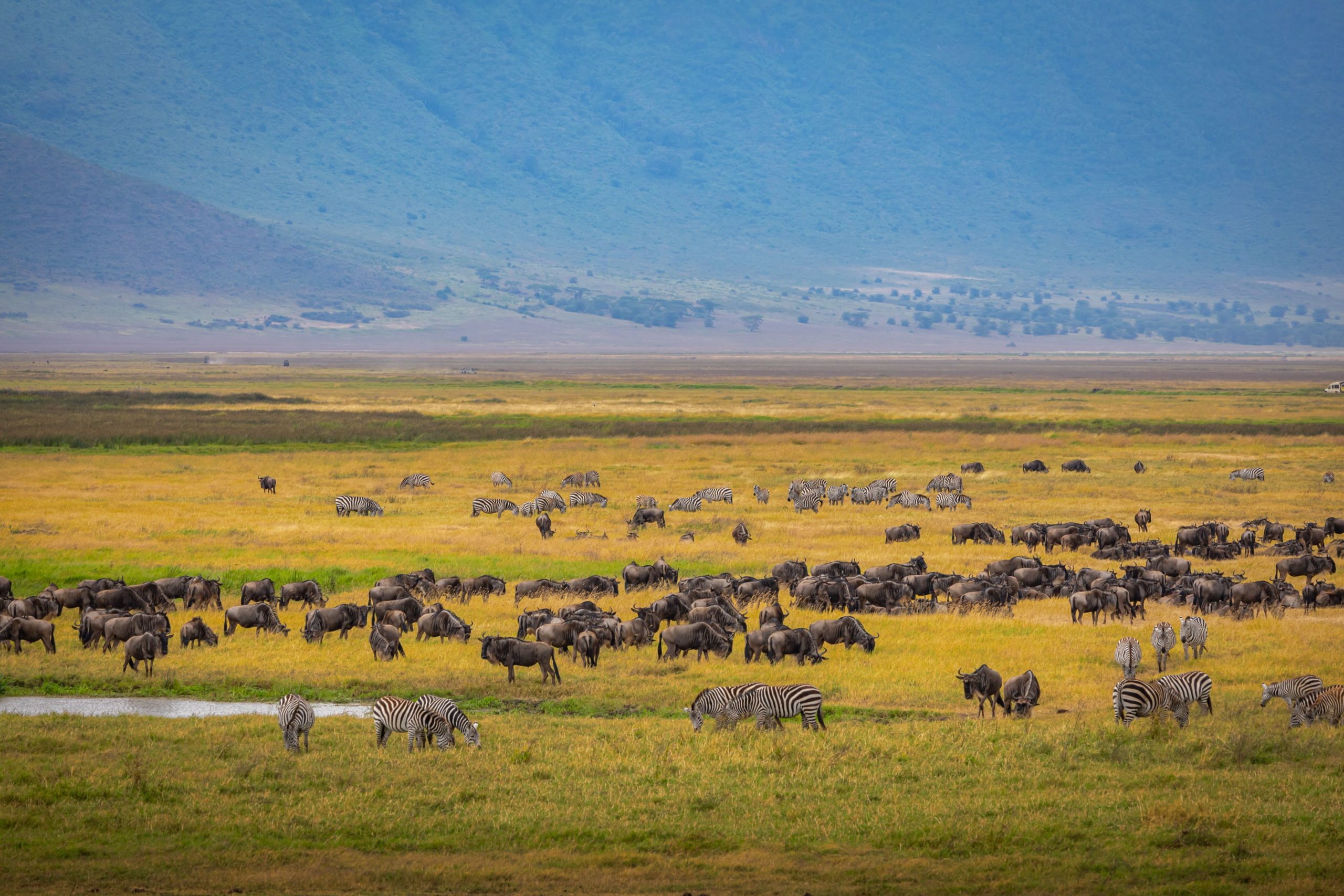 Understanding how the migration changes throughout the year is essential to deciding when and where to travel. Depending on the timing and length of the journey, it may be possible to experience more than one stage of the herds’ movement.
On the southern Serengeti plains, generally between January and March, the herds gather during calving season — hundreds of thousands of wildebeest born within a matter of weeks, the grasslands suddenly full of newborn calves finding their footing while lions and cheetahs watch from the margins. It is one of the most concentrated bursts of life and predation anywhere on the continent.
As the dry season develops, the animals move north through Tanzania. Here, the migration is experienced as a journey rather than a single event. The herd strings out for miles across the central and western Serengeti, pausing where grazing and water remain before continuing onward.
Farther north, usually between July and October, the Mara River becomes the focus. Herds gather above the banks, sometimes hesitating for hours before entering the water. The crossing itself may then unfold within minutes, chaotic and total.
These periods offer a useful framework, but rainfall ultimately determines the animals’ movements. The strongest itinerary begins with your dates and interests, then identifies the region most likely to offer meaningful access.
2. How Can You Follow the Migration from the Ground?
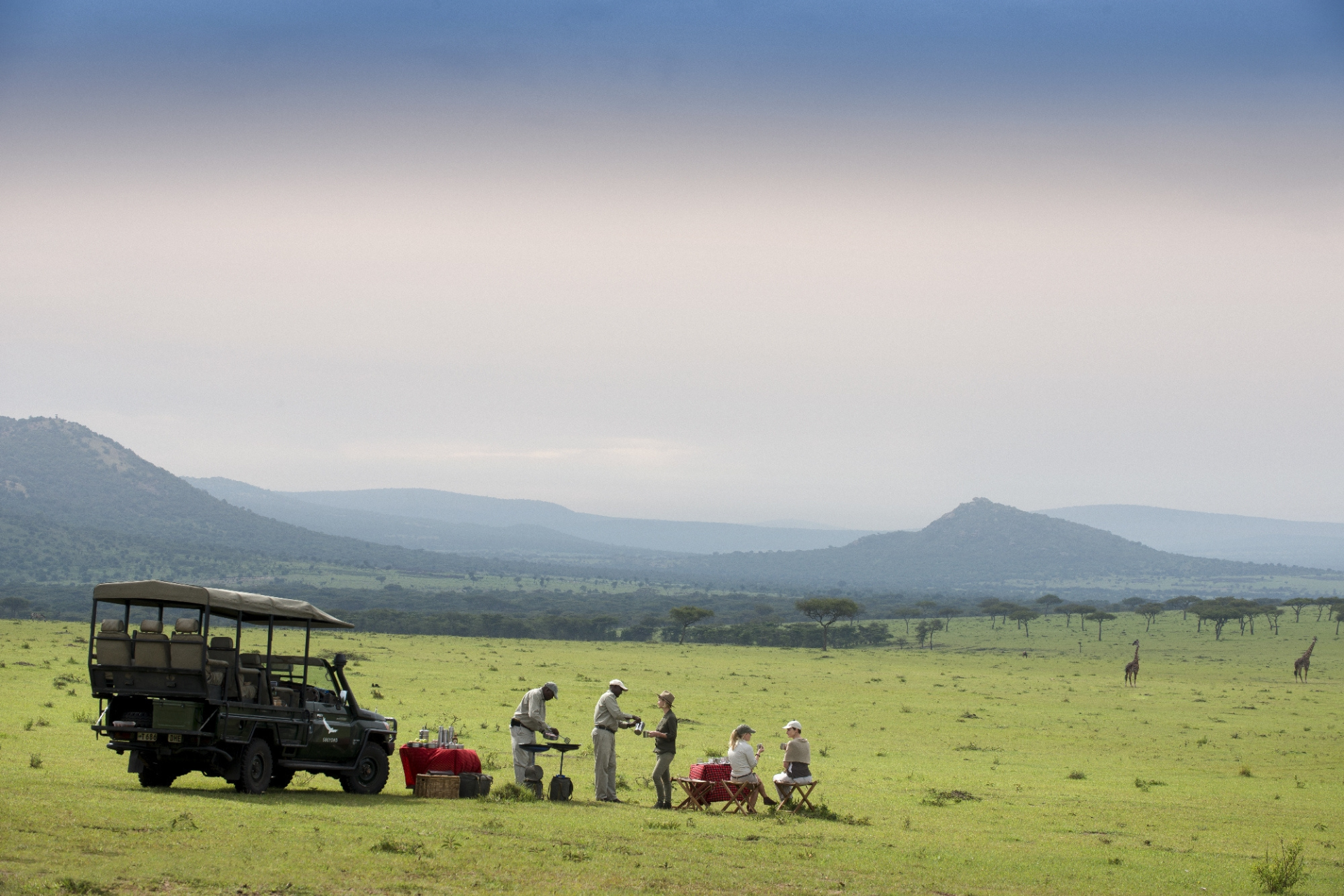 A private safari vehicle offers the greatest freedom to follow the migration as it unfolds.
Rather than being tied to a fixed route or shared schedule, you can leave before sunrise, remain with a sighting for as long as it develops, and change direction when guides identify movement elsewhere. One morning may be spent alongside thousands of wildebeest; another may focus on a lion pride using the edge of the herd as cover.
This flexibility is particularly important for photographers, families, and travelers interested in animal behavior. The best encounters are rarely improved by rushing. A predator may spend an hour studying the herd before making a move. Wildebeest may approach water several times before deciding whether to continue.
A private vehicle also allows the guide to shape each day around the conditions. Heat, light, recent rainfall, tracks, and reports from other guides all influence where to go.
3. How Can You Stay Close To The Herds?
 A strategically positioned mobile camp can place you near the migration while keeping the experience closely connected to the landscape.
Unlike permanent lodges, seasonal camps relocate to different parts of the Serengeti during the year. They do not move with the herds each day, but establish themselves in areas where the animals are likely to gather or pass through during a particular period.
The best mobile camps balance comfort with closeness to the wild. Spacious tents, proper beds, private bathrooms, thoughtful food, and highly trained staff make the experience effortless without sealing guests away from their surroundings. At night, there may be little between the bed and the sounds of the plains but canvas.
This proximity changes the rhythm of the safari entirely. Game viewing does not begin only when you enter a vehicle. Tracks may appear around camp in the morning. Wildebeest may pass nearby during breakfast. Lions may be heard after dark. The safari, in other words, never fully stops.
4. How Can You See the Scale of the Migration From Above?
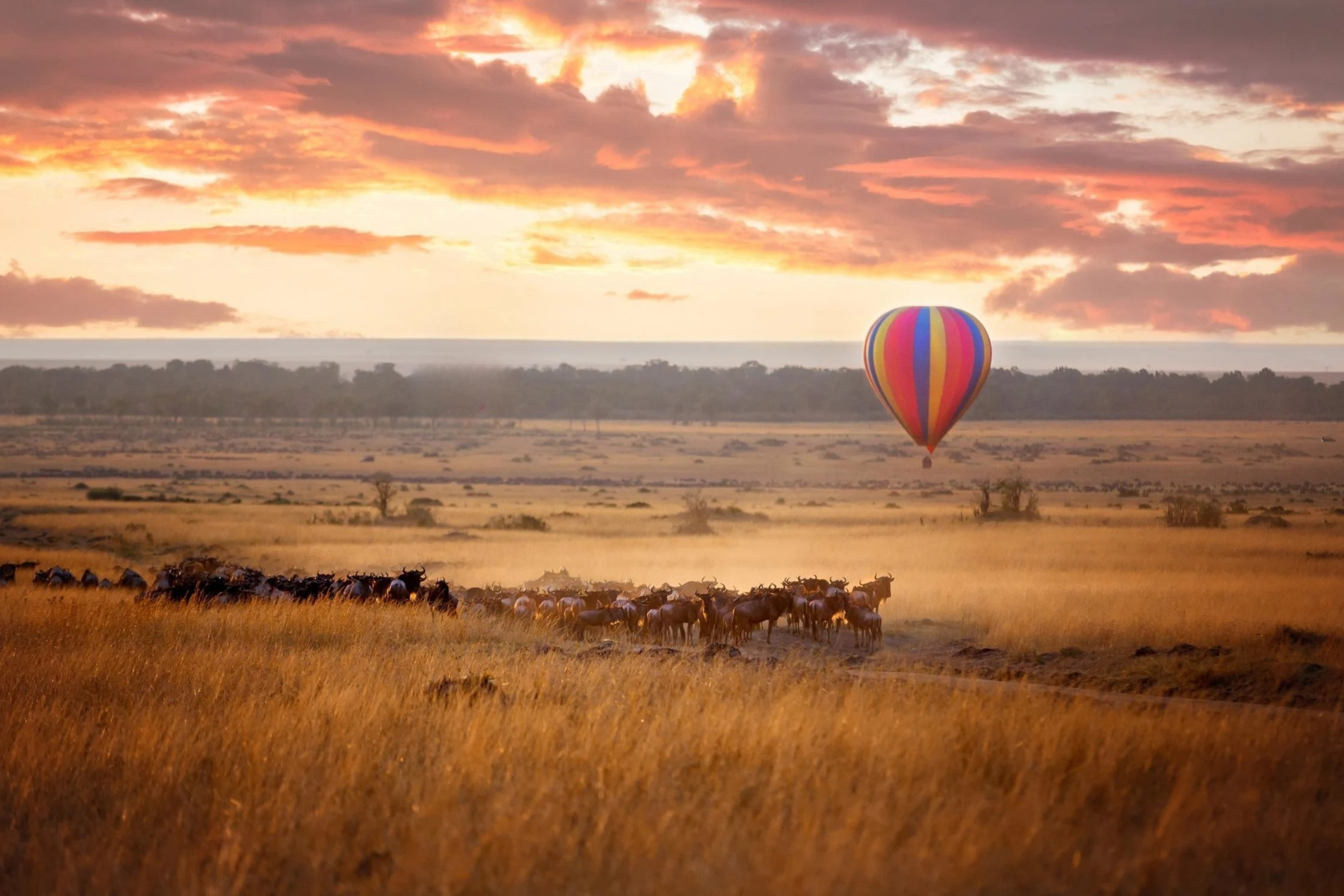 A hot-air balloon flight offers a perspective that cannot be gained from the ground.
From a vehicle, even a large herd is contained by the horizon. From the air, its structure becomes visible. Animal trails intersect across the grasslands, groups collect around water, and lines of wildebeest extend through areas that appeared empty at ground level.
Flights typically begin near dawn, when the air is cooler and the plains are at their most active. Predators may still be moving after the night’s hunt, hippos return toward water, and giraffes cross between acacia trees below.
The balloon does not replace the intimacy of a game drive. It provides context. From the ground, you see individual decisions and moments of tension; from above, you see how those moments belong to a much larger system.
For travelers who want to understand the true dimensions of the Serengeti, the two experiences belong together.
5. Can You Experience the Great Migration on Foot?
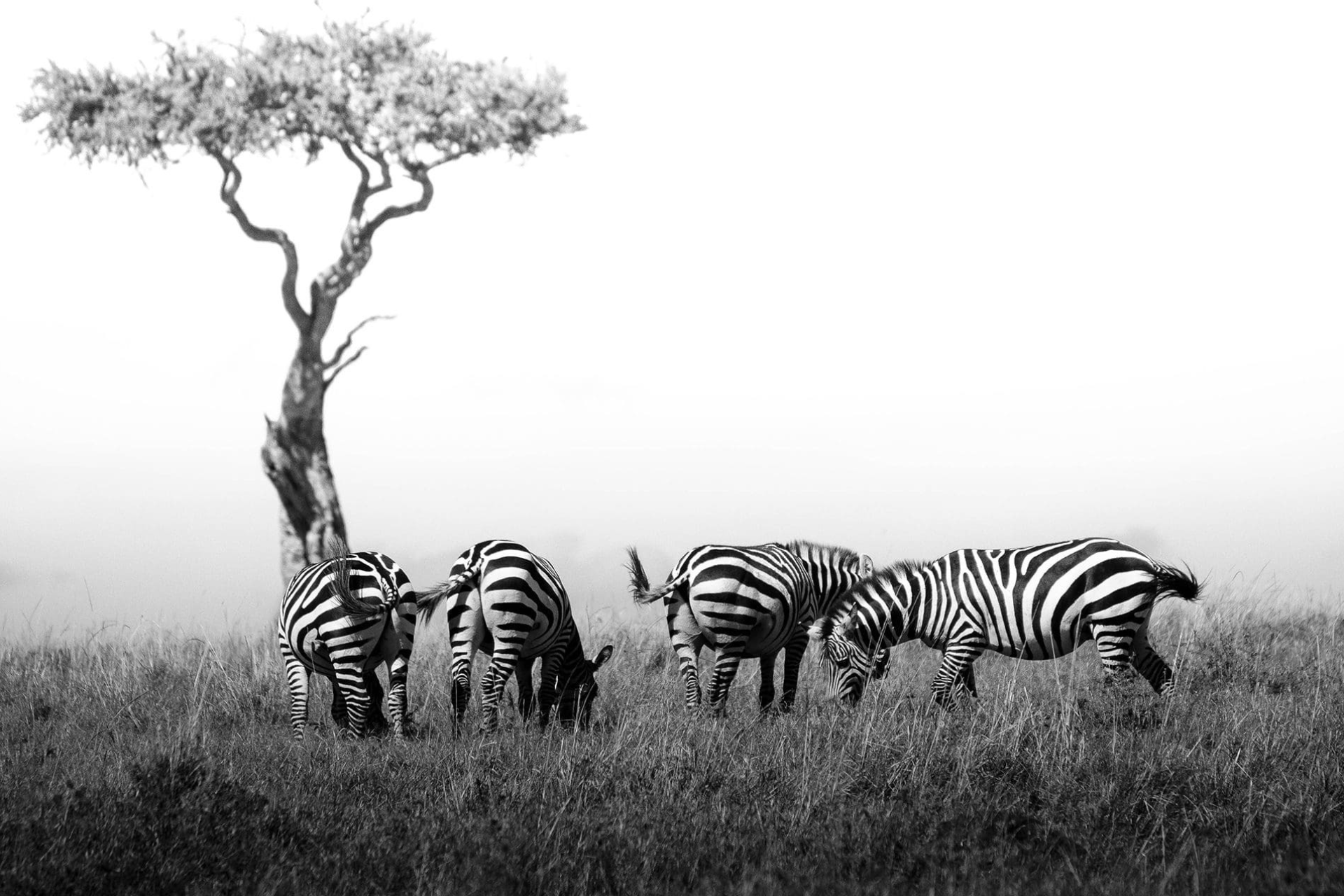 In selected areas, walking with expert guides and trackers offers a more attentive way to understand the landscape around the migration.
A walking safari is not intended to place travelers beside a massed herd or at the edge of a river crossing. Its value lies in the details that disappear from a vehicle: tracks pressed into the soil, grass bent by animals moving overnight, alarm calls carrying through the bush, the remains of a predator’s kill.
On foot, distance feels different. Small changes in the terrain become important, and the apparent emptiness of the plains begins to fall away. A guide crouching over a fresh print can tell you the animal’s size, direction, and how recently it passed — the kind of reading of the land that turns an empty-looking plain into a story unfolding in real time.
6. How Can You Witness a Mara River Crossing?
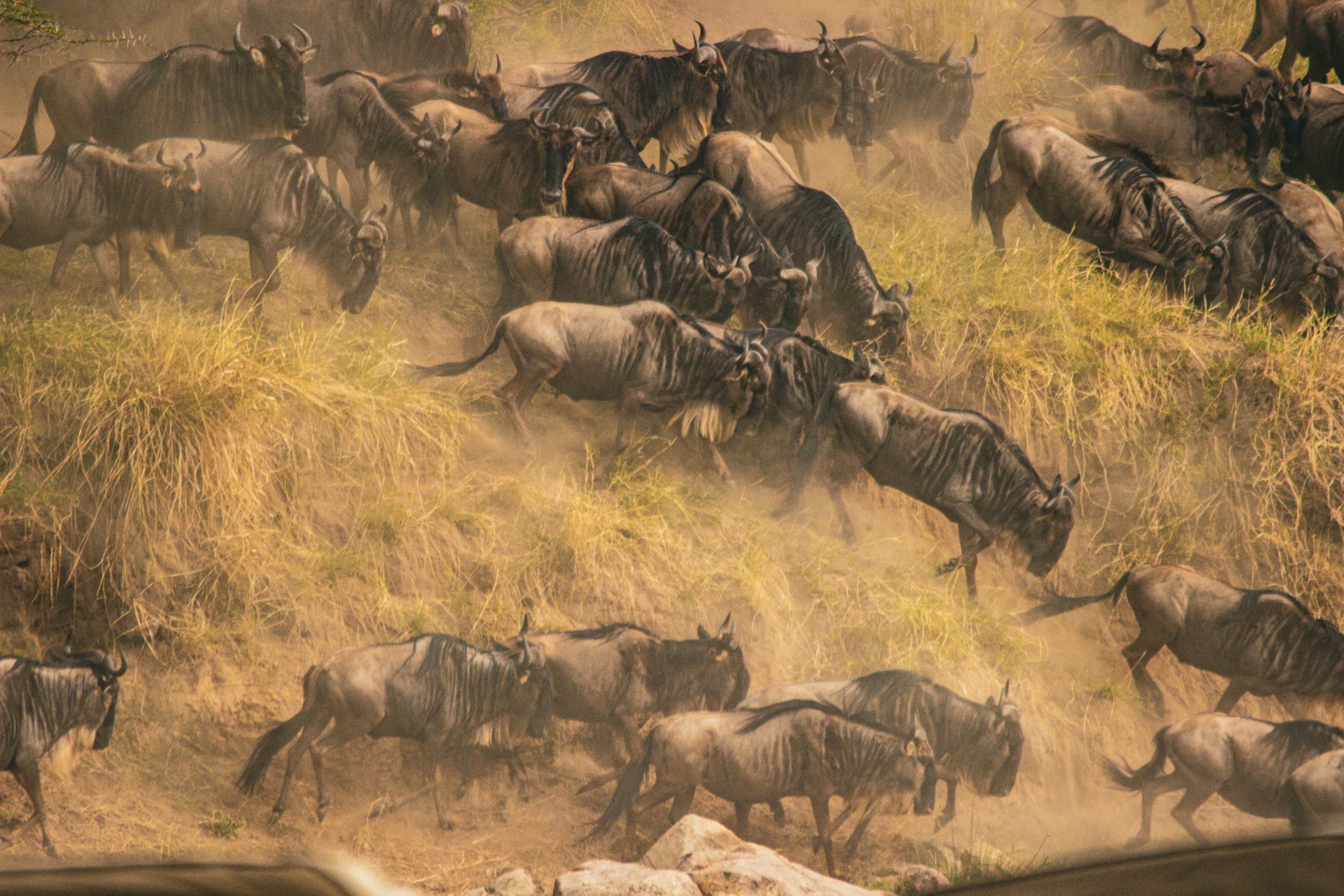
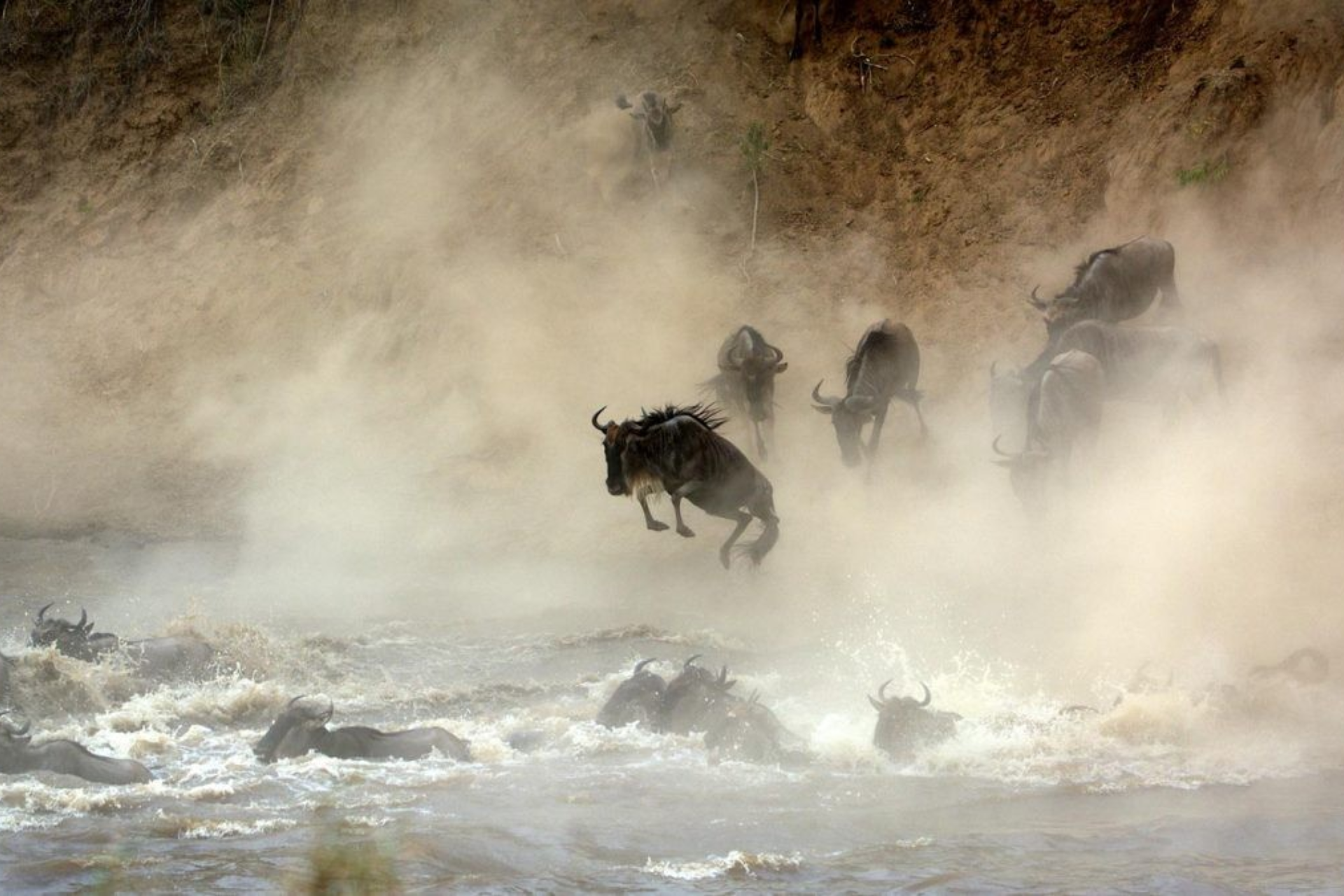 The event begins before the first animal enters the water. Wildebeest gather above the bank, moving forward and retreating again. Pressure builds within the herd, but no animal appears willing to lead. One may finally descend, and hundreds — or thousands — follow, throwing themselves down the bank in a single surge.
The river presents real danger. Currents can be strong, banks steep, and crocodiles wait beneath the surface. The density of the herd creates further risk as animals collide, lose their footing, or struggle to climb the opposite side. It is chaotic, high-stakes, and completely unscripted.
A crossing may happen soon after you arrive. It may happen many hours later, or not at all. The herd may turn away and cross somewhere else entirely. The best approach is to spend several nights in the right area and work with a guide who understands the crossing points, the behavior of the herds, and the local terrain.
How We Plan Your Journey
At The Legacy Untold, we design Great Migration safaris around access, timing, and the quality of the experience on the ground.
That may mean choosing a seasonal tented camp rather than a permanent lodge, securing a private vehicle with a particular guide, adding a balloon flight over the Serengeti, or arranging time with expert trackers. For one traveler, the priority may be photographing the herds on the open plains. For another, it may be witnessing a river crossing or introducing children to Africa through a safari paced around their interests.
We also look beyond the headline moment. The right journey may combine the migration with the Ngorongoro highlands, a private Kenyan conservancy, gorilla trekking in Rwanda, or several quiet days on the Indian Ocean after the dust of the plains.
The Great Migration cannot be staged or controlled. What expert planning can do is place you in the right landscape, with the right people, and enough time to experience it properly.
To begin planning a private Great Migration safari, visit www.thelegacyuntold.com or contact [email protected].