

Canada’s wilderness takes many forms. In Nunavut, summer light stretches through the night as beluga whales gather in Arctic estuaries. Along the coast of British Columbia, temperate forest meets narrow channels alive with bears, eagles, sea otters and whales. Farther east, icebergs drift past Newfoundland and Labrador while some of the continent’s most remote rivers cut through the Northwest Territories.
That range makes Canada particularly rewarding for travelers who want more than a conventional outdoor vacation. A single bespoke journey can combine rare wildlife encounters, privately guided expeditions and design-led wilderness lodges, with each region offering a completely different sense of place. For travelers deciding where to go in Canada for wildlife, remote lodges and adventure, these are some of the experiences worth traveling for.
1. What Are Some of the Best Wildlife Experiences in Remote Canada?
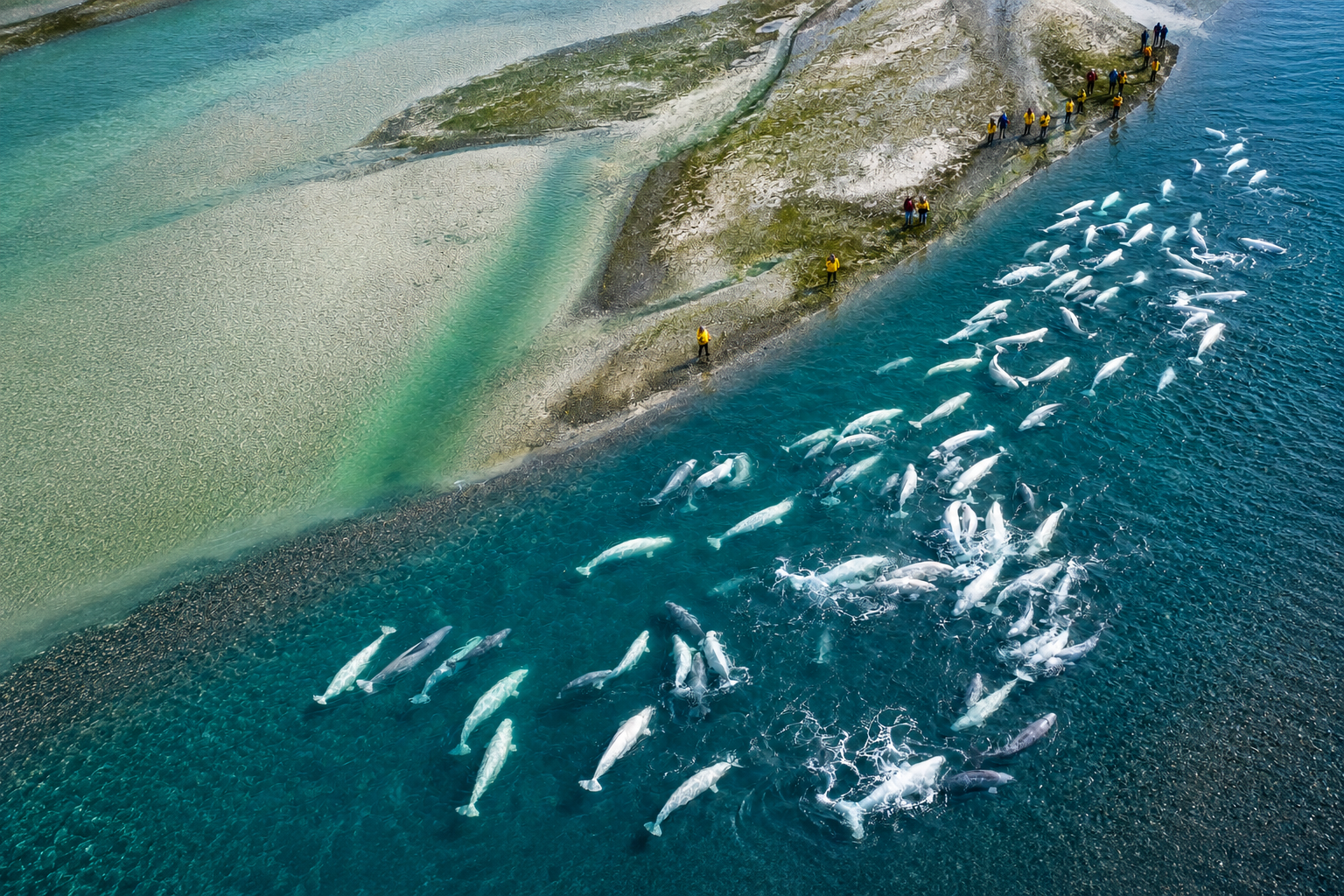 From polar bears and muskoxen in the Arctic to grizzly bears, humpback whales, bald eagles, seals, and sea lions along the Pacific coast, Canada offers extraordinary opportunities to encounter animals in vast natural habitats. For wildlife lovers, the scale of these experiences is part of what makes the country so remarkable.
STAND BESIDE 2,000 BELUGA WHALES
Each summer, more than 2,000 beluga whales gather in Cunningham Inlet near Somerset Island. From shore, their white backs can seem to fill the water; from a kayak, their clicks, whistles and calls carry through the water at close range. The sheltered shallows are also used by mothers and calves, offering a remarkable opportunity to observe how young belugas learn to swim and move with the pod.
Belugas are among the most vocal whales on Earth, often called the “canaries of the sea.” Hearing that constant conversation while standing in the stillness of the High Arctic is one of Canada’s most affecting wildlife encounters.
THOUSANDS OF BALD EAGLES
On the coast of British Columbia, seasonal concentrations of Pacific herring can draw an extraordinary number of predators into one place. Bald eagles gather along the shoreline and compete with gulls and other wildlife as strong currents push fish towards the surface and into the shallows. At the height of the event, hundreds—and occasionally close to 1,000—may be visible across the wider area.
For Mark Lakin, seeing this spectacle firsthand completely changed his understanding of the species:
“I had never seen more than one of these elusive birds at a time. I didn’t even know something like this was possible. Hands down, one of the greatest wildlife encounters of my life.” — Mark Lakin
Watch Mark’s encounter with the bald eagles.
SEEING MUSKOXEN IN THE ARCTIC
Known as the shaggy survivors of the Ice Age, muskoxen have roamed the Earth for hundreds of thousands of years. These large hoofed mammals weigh over 600 lbs, and during fights over females, two males will run towards each other at up to 30 miles per hour and smash skulls. To see these mythical dinosaurs in real life is truly incredible.
QUAD BIKING WITH POLAR BEARS
Quad bike in search of polar bears, coming within just 50 feet!
Traveling by quad bike makes the search itself part of the wildlife experience. Rather than following a conventional route, you move across vast stretches of Arctic terrain where the landscape feels almost completely untouched and every sighting is dictated by the wild. Few encounters compare to seeing a polar bear in its natural habitat with nothing but tundra stretching out around you.
2. What Are the Top Remote Wilderness Lodges in Canada?
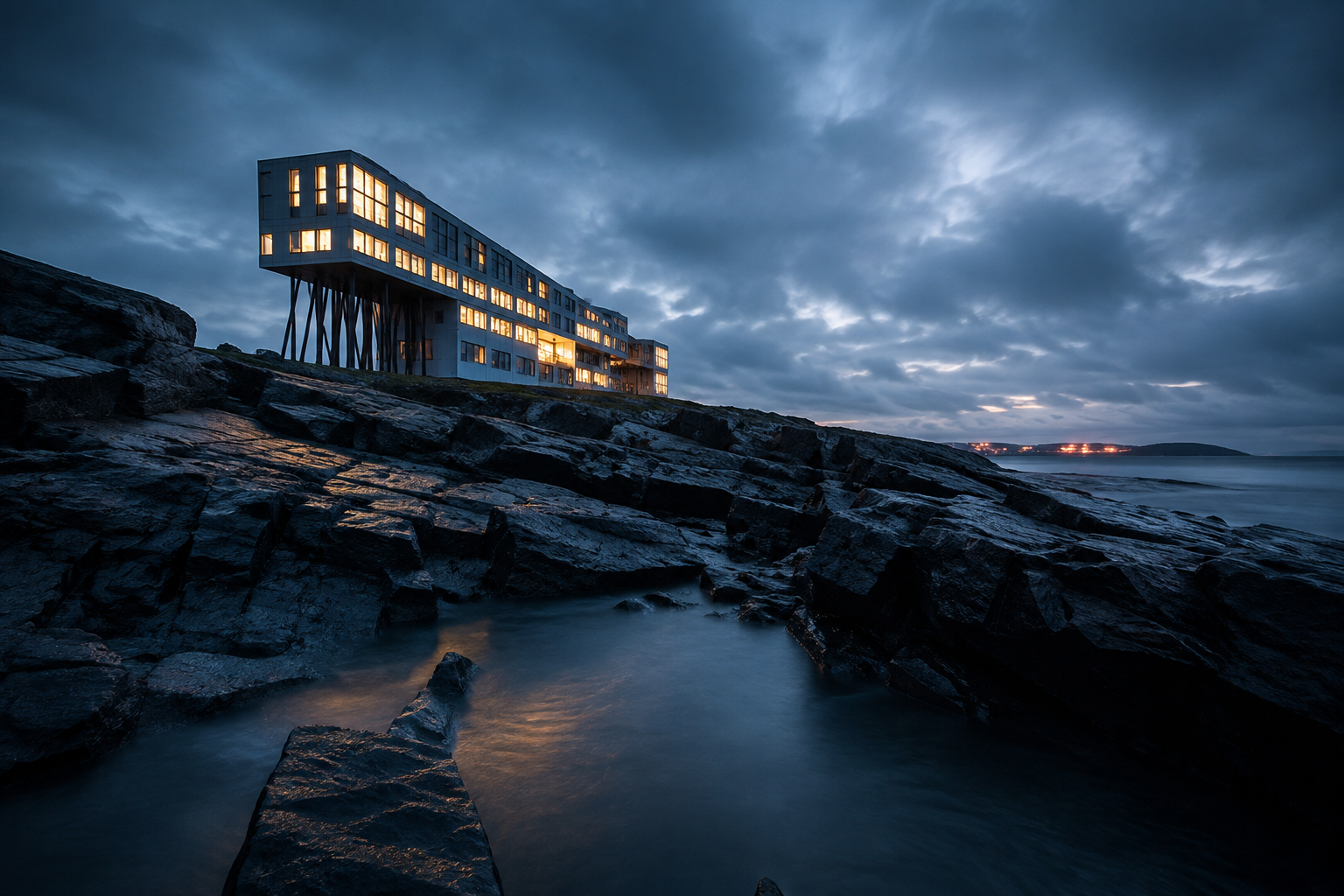 Some of the country’s most memorable luxury accommodations are found well beyond the major cities, in places chosen precisely because they feel difficult to reach. Remote Arctic lodges, wilderness retreats, island hotels, and environmentally conscious properties allow travelers to experience Canada’s landscapes without sacrificing comfort.
A SECRET RETREAT WITHIN A BIOSPHERE RESERVE
This lodge setting is true wilderness. The things David Attenborough documentaries are made of. A wildlife refuge with rich biodiversity. A whimsical adventure at every turn. A home to some of the last remaining ancient temperate rainforests in the world where thousand-year-old trees extend an astonishing 300 feet up into the sky. A stunning mosaic of emerald valleys, snow-capped peaks, rushing rivers, clustered islands, ocean and rocky coastal shores. Welcome to Clayoquot Wilderness Lodge. Just 25 luxury canvas guest tents, cedar hot tubs with sweeping views, and an open-air riverside bar… Bears, whales, seals, and sea otter rafts are delivered with excitement by your very own private guide accompanied by their very own canine companion.
Watch a short video of Mark’s journey.
A LUXURY INN AT THE EDGE OF THE WORLD
Wander through a 90-square-mile stretch of 10 minuscule fishing villages with colorful clapboard houses, its very own time zone, and an atmosphere undeniably reminiscent of the 18th century. With one gleaming exception—a $40 million, luxury inn. Part edge-of-the-earth destination, part economic-engine-on-stilts, the inn was conceived by eighth generation Fogo Islander and remarkable individual, Zita Cobb. Fogo Island is a beautiful success story of how a single hotel can regenerate an entire island economy. Built exclusively with materials found on the island, employing locals only, a hub for resident artists and traveling guest chefs—Fogo Inn is one-of-a-kind.
A HYDROELECTRIC LODGE SINCE 1981
From the very beginning, this property’s founding family had one goal—to share their dream of living off the land while minimizing their footprint on the environment itself, before anyone else was even thinking about the impact of fossil fuels. The location of Nimmo Bay was entirely dictated by the presence of streams and waterfalls—and has run on a hydropower system since it welcomed its first guests in 1981. Their sustainable practices don’t infringe on the luxury or comfort associated with your experience, if anything, they enhance it.
Fine coastal dining is excellent here because they sustainably source and support local farms, the wildlife sightings are exceptional because they fund groundbreaking research and aquaculture activism, and the surroundings remain spectacular because they build on floating docks in lieu of deforesting land. Nimmo Bay is a living reminder that if you respect the wild, it gives back tenfold.
The best places to stay in Canada are often destinations in their own right. Rather than simply providing a base for sightseeing, these properties use their surroundings to shape the experience: Arctic wilderness, ancient rainforest, remote coastlines, local communities, and conservation all become part of the stay. For travelers seeking privacy and a genuine sense of place, Canada’s luxury lodge scene can be every bit as compelling as its landscapes.
3. What Are the Most Extraordinary Adventures in Remote Canada?
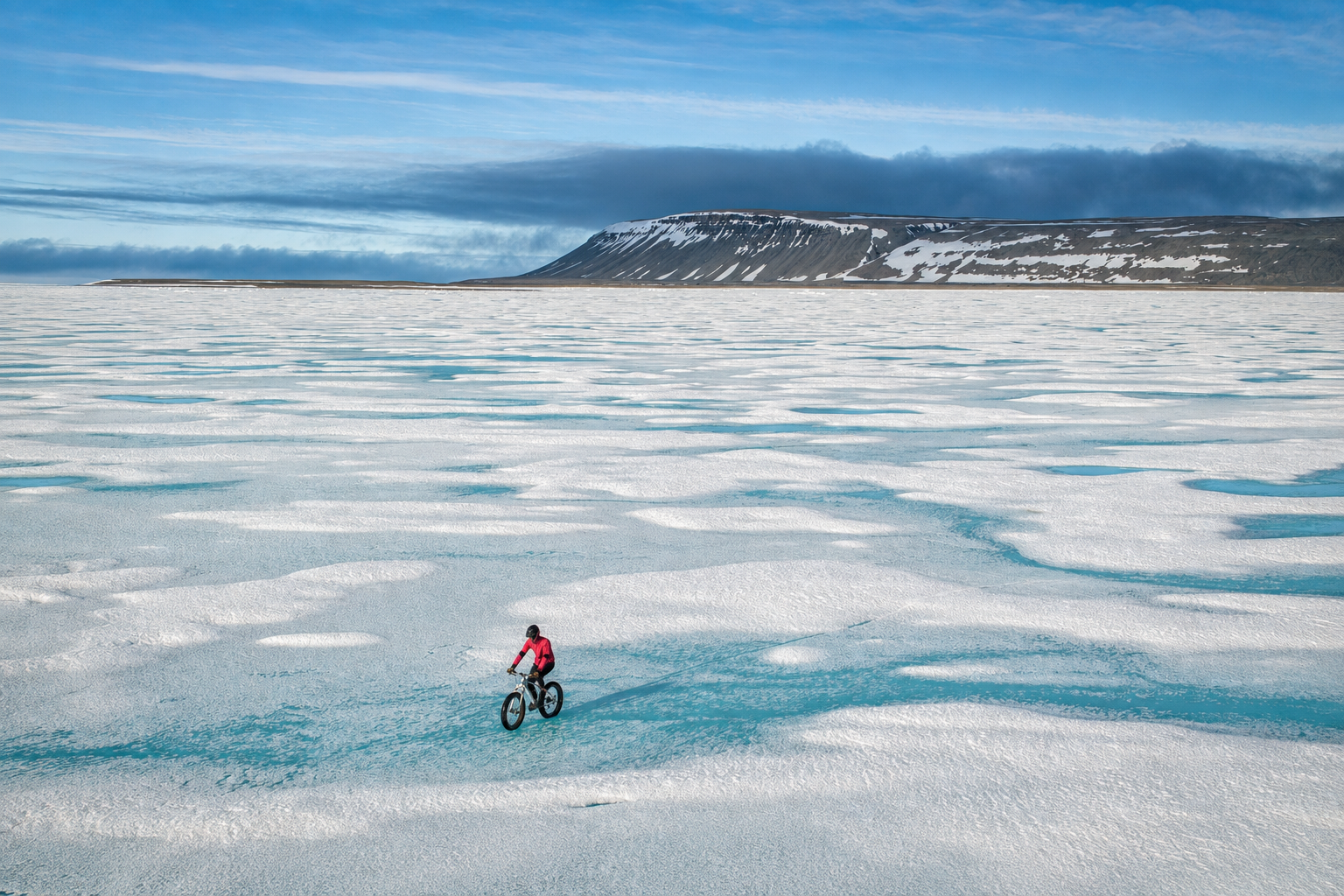 Canada’s scale makes it possible to experience the country from radically different perspectives: from the saddle of a fat bike on the Arctic Ocean, from a helicopter above the Coast Mountains or from a raft deep within the Northwest Territories. These are not simply activities added to an itinerary. Each one offers a distinct way into the landscape.
FAT BIKE ACROSS THE ARCTIC SEA ICE
In the High Arctic, sea ice more than two meters thick becomes a seasonal route across the Northwest Passage. Wide tires provide stability on the frozen surface as riders pass turquoise melt pools, resting seals and migrating snow geese beneath the near-constant light of summer.
The distances can be adapted to the traveler, but the feeling remains the same: cycling over an ocean that is solid beneath you, in a place with no conventional roads, transforms a familiar activity into a true expedition.
HELI-HIKE ABOVE THE PACIFIC COAST
British Columbia’s mountains contain ridgelines, glaciers and alpine valleys that cannot be reached by road. A helicopter can place travelers directly into this backcountry for privately guided hikes, with routes chosen for the conditions and the group’s ability.
From Vancouver Island, a single flight can rise from temperate rainforest to a high mountain ridge with views across the Pacific. Elsewhere in British Columbia, heli-accessed days may include glacier walks, alpine picnics or paddling on an isolated mountain lake. The luxury lies as much in access and solitude as it does in the aircraft itself.
RAFT THROUGH NAHANNI NATIONAL PARK RESERVE
The South Nahanni River travels through one of North America’s great wilderness landscapes, passing deep canyons, hot springs and Virginia Falls on its course through the Northwest Territories. Reaching it generally requires a floatplane, and multi-day rafting journeys allow travelers to move through the landscape at river level rather than observe it from a distance.
The experience can be physically demanding, but carefully planned private expeditions combine expert river guides with comfortable camps and time to hike away from the water. It is one of the most immersive ways to understand the scale of remote northern Canada.
FOLLOW ICEBERGS ALONG THE NORTH ATLANTIC
Each spring and early summer, icebergs carried south from Greenland pass the coast of Newfoundland and Labrador. Their shapes, color and scale shift constantly with the weather, creating opportunities to see them from the shoreline, by private boat or by kayak when conditions allow.
An iceberg-focused journey can also connect travelers with small coastal communities, working harbors and a food culture closely tied to the North Atlantic. This is adventure at a slower pace, built around observation and the rhythms of the sea.
LEARN FROM INDIGENOUS GUIDES
Some of the most meaningful journeys in Canada are led by Indigenous guides whose families and communities have known these landscapes for generations. Depending on the destination, an experience may focus on wildlife tracking, travel on sea ice, cultural interpretation, traditional foods, carving, storytelling or the living history of a particular Nation.
The most thoughtful itineraries begin with the specific people and place, allowing their knowledge and priorities to shape the experience while ensuring that tourism directly supports the community involved.
EXPERIENCE CANADA THROUGH ITS FOOD
Remote dining in Canada is inseparable from its geography. A day might end with an elegant candlelit dinner in a tent, a chef-prepared picnic on an alpine ridge or a bonfire meal beside the water. On the Pacific coast, guests can forage for edible plants and seaweed, lift Dungeness crab traps or join local experts in sourcing sea urchins before a chef turns the day’s ingredients into dinner.
These experiences are most compelling when they reveal the relationship between a region and what it produces. Food becomes another form of exploration rather than simply a reward after it.
BEGIN OR END IN VANCOUVER
Vancouver works best in a wilderness itinerary as a point of contrast and an easy gateway to British Columbia’s coast. Mountains and water define the city, while its restaurants draw on one of Canada’s most culturally diverse populations and exceptional access to Pacific seafood and regional produce.
A carefully planned stay might combine galleries and independent design stores with a private visit to Granville Island, time on the waterfront and a dinner that introduces the ingredients encountered later in the journey. After days in a remote lodge, the city can also provide a gentle return to urban life without losing sight of the landscape.
No single itinerary needs to include every region or activity. What makes adventure travel in Canada so compelling is the ability to build a journey around one clear interest—wildlife, rivers, food, Arctic exploration or the Pacific coast—and then add experiences that deepen it rather than distract from it.
4. Plan Your Next Luxury Journey to Canada With The Legacy Untold
 What makes Canada especially compelling is not simply the number of extraordinary things to see, but the feeling of experiencing them in places that remain genuinely wild. There is space here—to venture farther, stay longer, and experience landscapes on a scale that is increasingly rare.
The most memorable journeys through Canada are often built around contrast. An exhilarating morning can give way to an impossibly peaceful afternoon; an expedition into remote wilderness can end with beautiful food, thoughtful service, and a deep sense of comfort. The luxury never needs to compete with the landscape. At its best, it simply gives you a more extraordinary way to experience it.
And perhaps that is Canada’s greatest appeal: even for travelers who have seen much of the world, it still has the capacity to surprise. The distances are greater, the wilderness feels wilder, and some of the most remarkable moments happen in places you may never have thought to look.
To begin planning a bespoke journey through Canada, reach out to The Legacy Untold at [email protected] or visit www.thelegacyuntold.com.