

When and where can travelers see the Northern Lights? The best places to see the Aurora Borealis are destinations that sit beneath the auroral oval, offer long dark nights, and pair the sky with experiences worth traveling for in their own right — from Canada’s subarctic wilderness and Iceland’s volcanic landscapes to Norway’s fjords, the snowfields of Finnish Lapland, and the icy expanse of Alaska. Below, we share where to go, when to travel, and how to plan a Northern Lights journey that feels extraordinary even before the sky begins to move.
At The Legacy Untold Travel, the Northern Lights are one of the most requested experiences we design around. Travelers often begin with a single goal: to see the aurora. But the strongest journeys are never built around one night of sky-watching. They are built around destinations that offer extraordinary days as well as dark skies — polar wildlife in Canada, volcanic landscapes in Iceland, Arctic sailing in Norway, reindeer herding in Finish Lapland and private saunas in Alaska. The aurora may be the reason travelers begin dreaming about the trip, but the destination itself is what makes the journey worth taking.
1. What Do You Actually Need to See the Northern Lights?
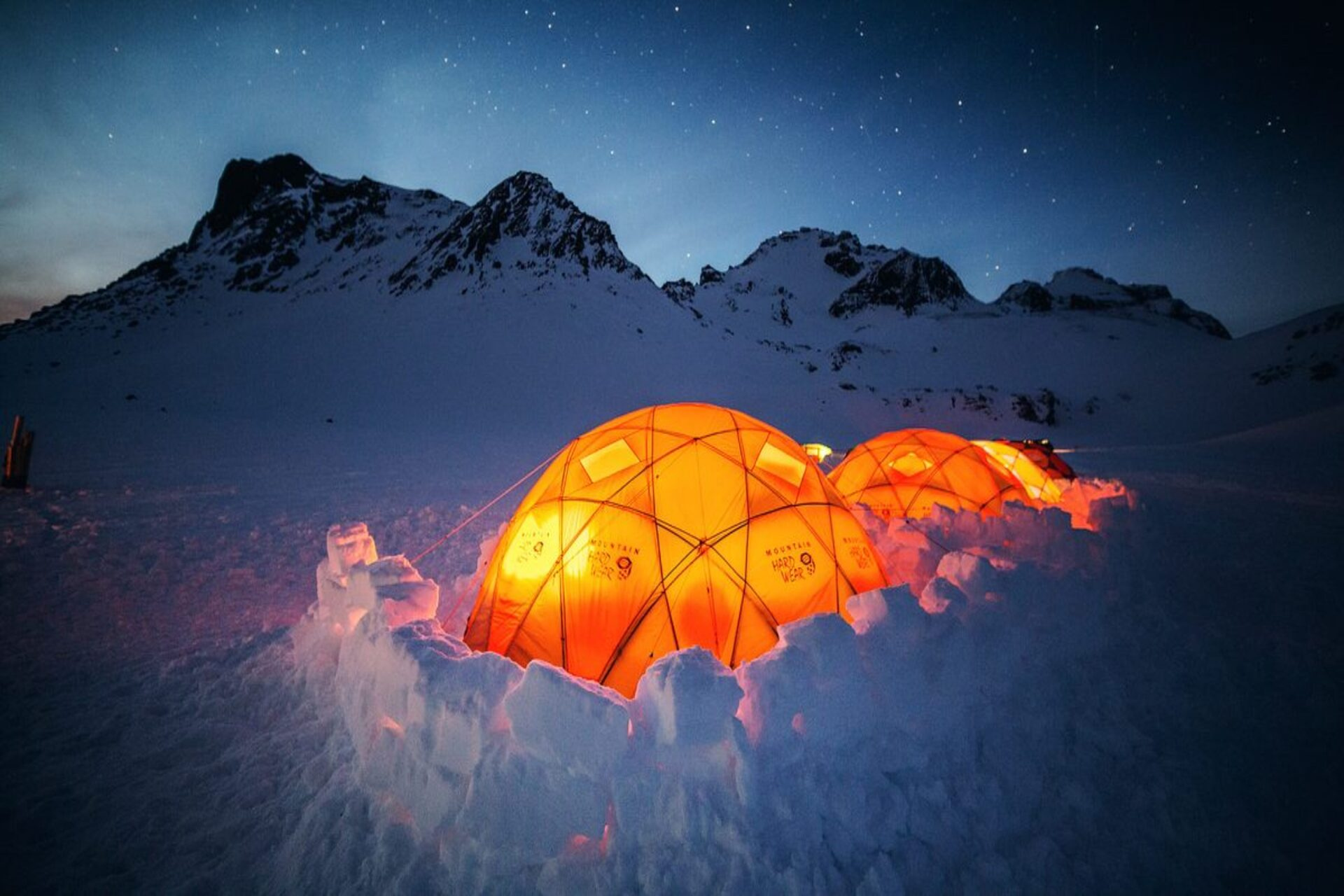 To see the Northern Lights, three things need to align: a location far enough north, truly dark skies, and clear weather. The Aurora Borealis occurs when charged solar particles interact with gases in the Earth’s atmosphere, creating bands of green, violet, pink, and white that can appear to ripple, pulse, or sweep across the sky in real time.
The part most travelers underestimate is not latitude. It is cloud cover.
A night can have excellent aurora activity and still deliver nothing if the sky is sealed shut. This is why the strongest itineraries include multiple nights in position, expert guides who understand local weather patterns, and enough richness during the day that the trip does not depend entirely on what happens after dark.
There is also the matter of solar activity. The strength of the aurora is often tracked through the Kp index, a scale that measures geomagnetic disturbance. Experienced guides monitor these conditions closely. They know when to move, when to wait, and how to position travelers for the best possible chance of seeing the sky come alive.
A great Northern Lights trip is not built on luck alone. It is built on patience, positioning, and design.
2. When is the Best Season to See the Northern Lights?
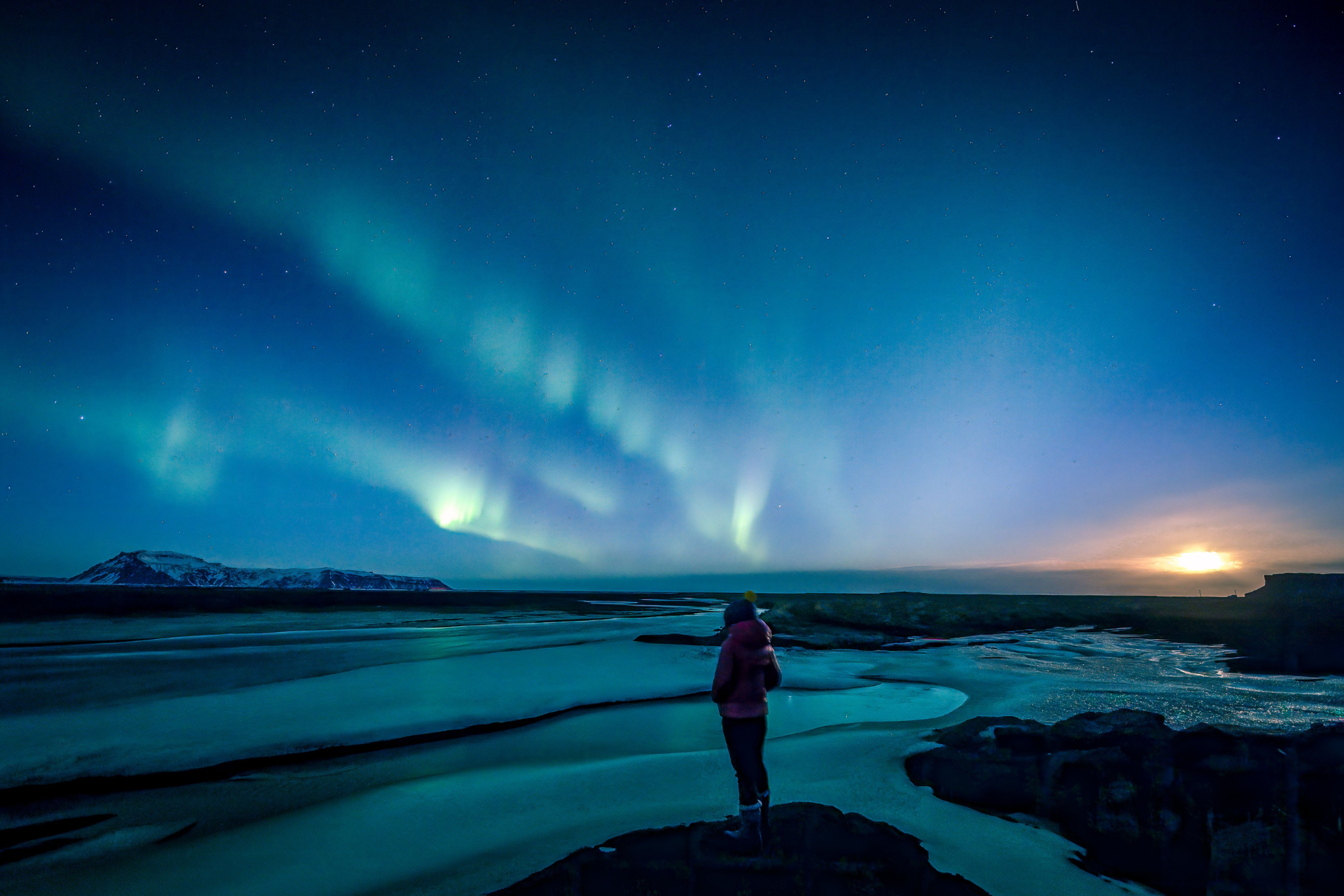 The Northern Lights season generally runs from late August through early April, when the nights are long and dark enough for the aurora to be visible. September through March tends to offer the most consistent conditions, with March often bringing some of the most active geomagnetic nights of the year.
New moon periods are especially coveted. The darker the sky, the more vivid the contrast. Snow cover can also deepen the experience, reflecting faint aurora light across the landscape so that the whole scene feels brighter, stranger, and more surreal.
For travelers considering Canada, late August can be a particularly compelling edge-of-season window. Earlier in the summer, daylight lingers too long for reliable aurora viewing. But by the second half of August, darkness begins to return in a meaningful way — and on a clear night, the aurora can appear above a landscape still alive with summer wildlife.
Winter brings its own kind of drama. In Norway and Finnish Lapland, snow transforms the experience completely: frozen forests, reindeer tracks, blue twilight, saunas steaming in the dark…
The right timing depends less on one “best” month than on what kind of journey you want around the lights.
3. Where Can You See the Northern Lights in Canada?
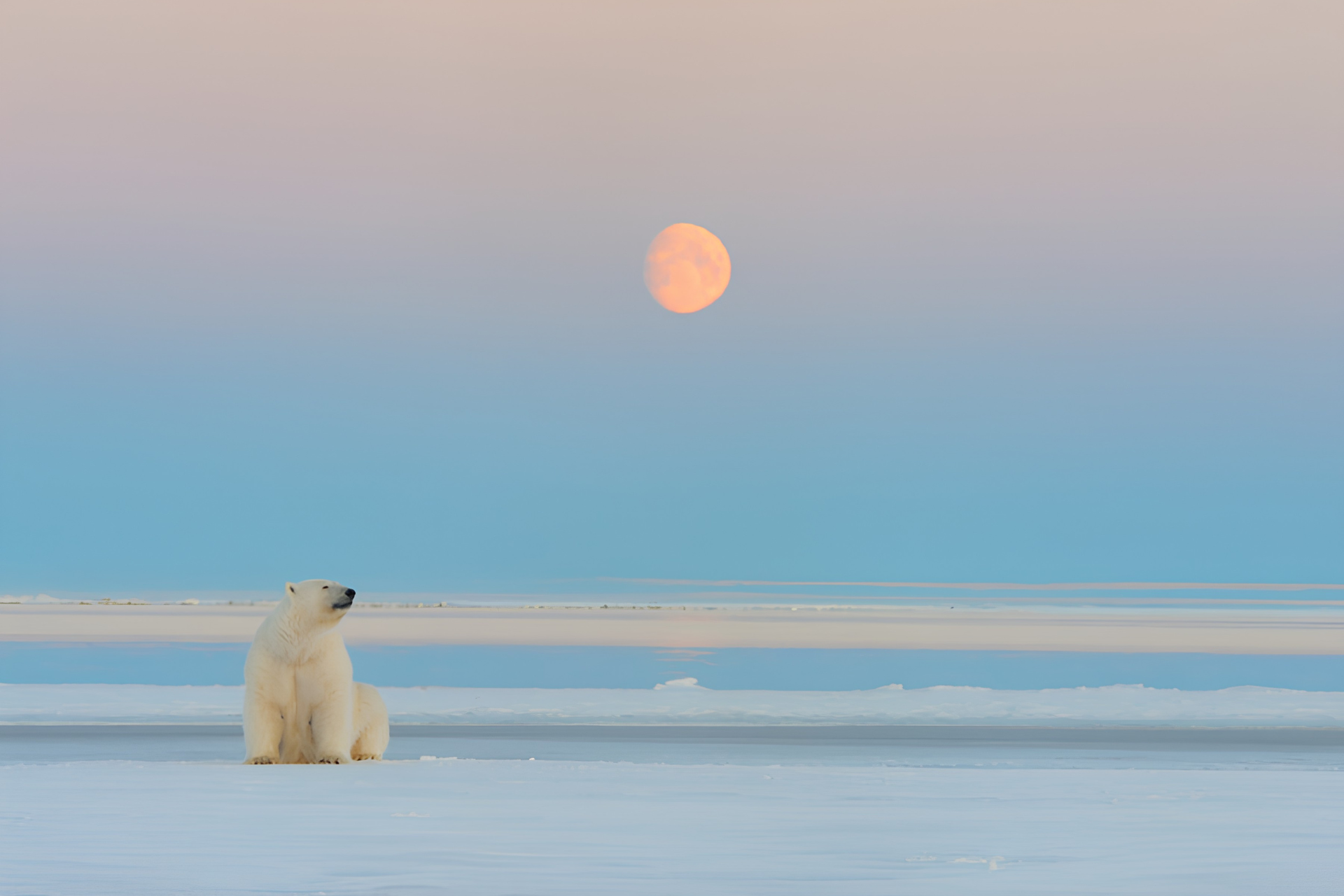 One of the most extraordinary places to see the Northern Lights is the Hudson Bay region of Manitoba, where subarctic wilderness, polar wildlife, and vast dark skies come together in a way few destinations can match.
This is not the Canada of polished ski resorts or lakeside retreats. This is roadless, immense, exposed wilderness — the kind of place where weather and wildlife still set the terms, and where simply getting there is part of the experience.
The remote properties we favor are accessed only by charter flight. There are no roads in. There is no casual foot traffic. The experience begins with the unmistakable feeling of crossing into a landscape that has not been arranged for human convenience.
For families and travelers who want variety, the strongest itineraries combine land and water: zodiac excursions on Hudson Bay, beluga whale encounters, guided hikes through polar bear country, and migratory birdlife that keeps the days unpredictable. This kind of trip works especially well for families because the wilderness offers multiple points of fascination.
For travelers drawn to something still deeper and more remote, we also design itineraries into boreal forest settings where the wildlife profile changes. Polar bears may still be part of the story, but so may black bears, moose, wolves, and, on rare occasions, wolverine. When the Northern Lights appear here, they feel like a natural extension of the place — not a performance staged above it, but another expression of the wilderness itself.
4. Where Can You See the Northern Lights in Alaska?
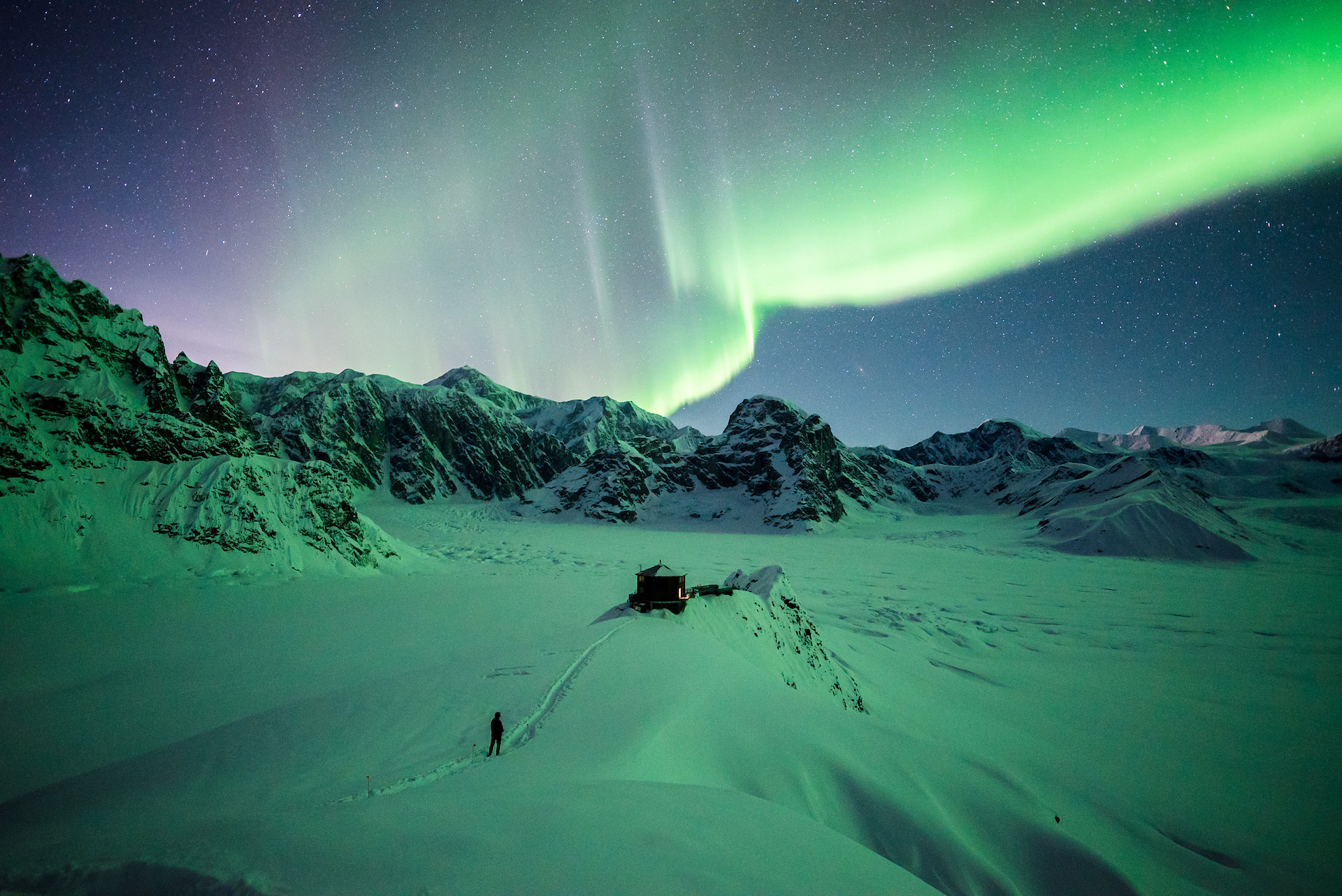 For travelers who want the Northern Lights paired with true expeditionary luxury, Alaska deserves its own place on the list — especially Sheldon Chalet, set deep inside Denali National Park on a private nunatak above the Ruth Glacier. The chalet sits at roughly 6,000 feet in the Alaska Range, surrounded by peaks, ice, and uninterrupted sky, creating the rare feeling of being completely removed from the rest of the world without giving up warmth, service, or comfort.
This is not the version of Alaska most travelers know. Sheldon Chalet is reached by air, and once guests arrive, the landscape becomes the itinerary: glacier trekking, snowfields, ice caves, sledding, private guiding, and long, quiet evenings watching the sky from one of the most remote luxury lodges in North America.
The best Alaska Northern Lights season generally runs from late August into April, with late September through early April as an especially strong window because of the longer, darker nights. As with every aurora destination, timing matters — but so does the setting. Here, travelers are not driving out from a city to chase a clear patch of sky. They are already in position, surrounded by glaciers, mountains, and silence.
What makes Sheldon Chalet extraordinary is that the Northern Lights are only part of the reason to go. The real appeal is the combination: Denali’s scale, the remoteness of the Ruth Glacier, the intimacy of a private alpine retreat, and the sense that every hour — whether spent outside on the ice or inside over a chef-prepared meal — belongs entirely to the place. When the aurora begins to move above that landscape, it does not feel like an added event. It feels like Alaska revealing one more layer of itself.
5. Why is Iceland One of the Best Places to See the Northern Lights?
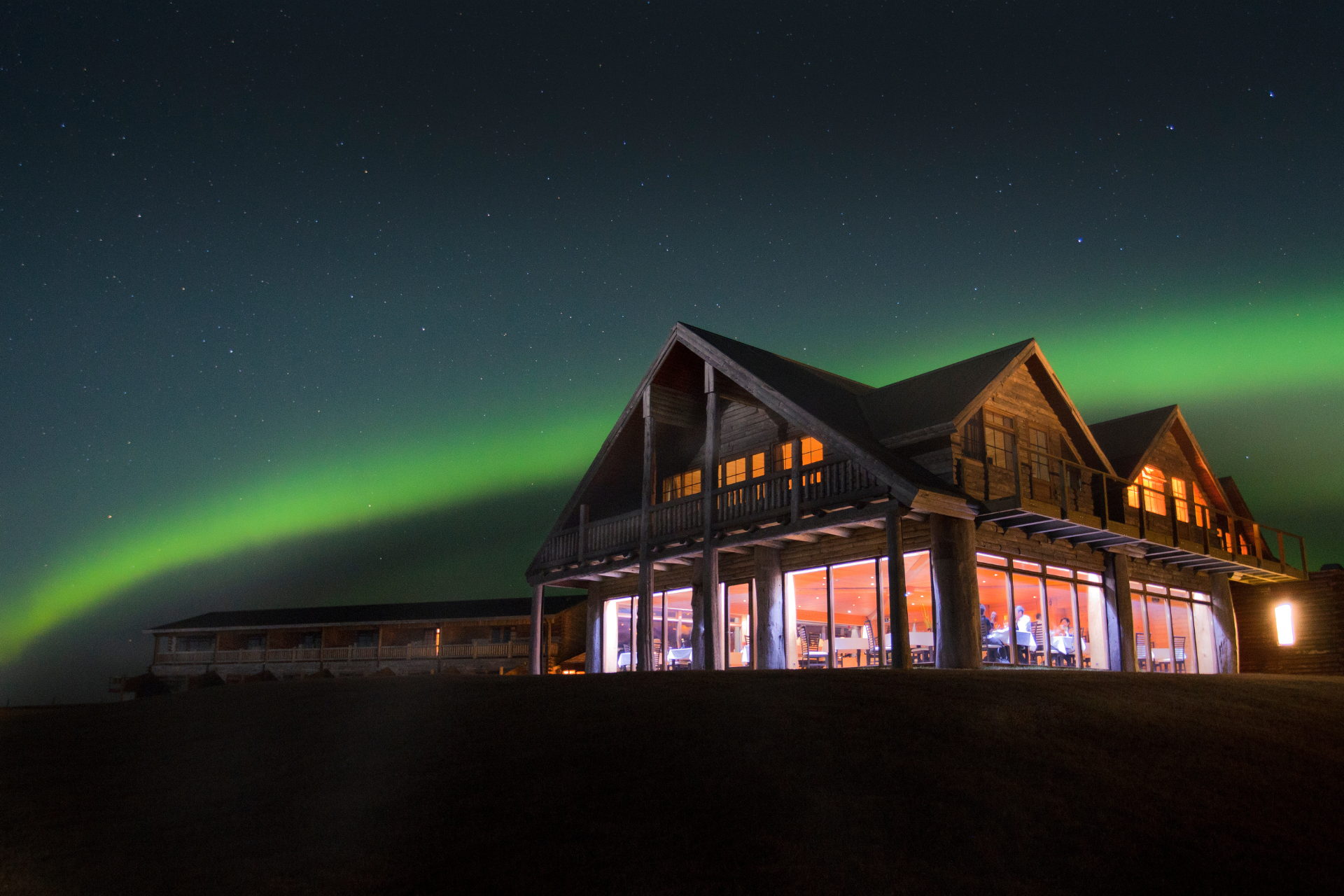 By day, travelers move through a landscape of volcanic rock, black sand, glaciers, waterfalls, geothermal steam, and wind coming hard off the sea. By night, if the clouds clear, everything quiets. The aurora appears above a country already shaped by fire and ice.
A well-designed Iceland journey usually begins in Reykjavík, a compact and characterful city with excellent restaurants, a lively harbor, and easy access to evening Northern Lights excursions by land or sea. From there, the itinerary moves into the country itself: the Saga Valley, geothermal bathing along the coast, the Golden Circle, and Þingvellir National Park, where the North American and Eurasian tectonic plates meet.
The South Coast brings another register entirely. Seljalandsfoss and Skógafoss deliver the waterfall drama travelers expect from Iceland, while Reynisfjara, the black sand beach near Vík, is stranger and more powerful in person than photographs suggest. Basalt columns, roaring surf, sea stacks offshore — the whole place seems designed to remind visitors that beauty here is rarely gentle.
6. Why combine Norway and Finnish Lapland for a Northern Lights trip?
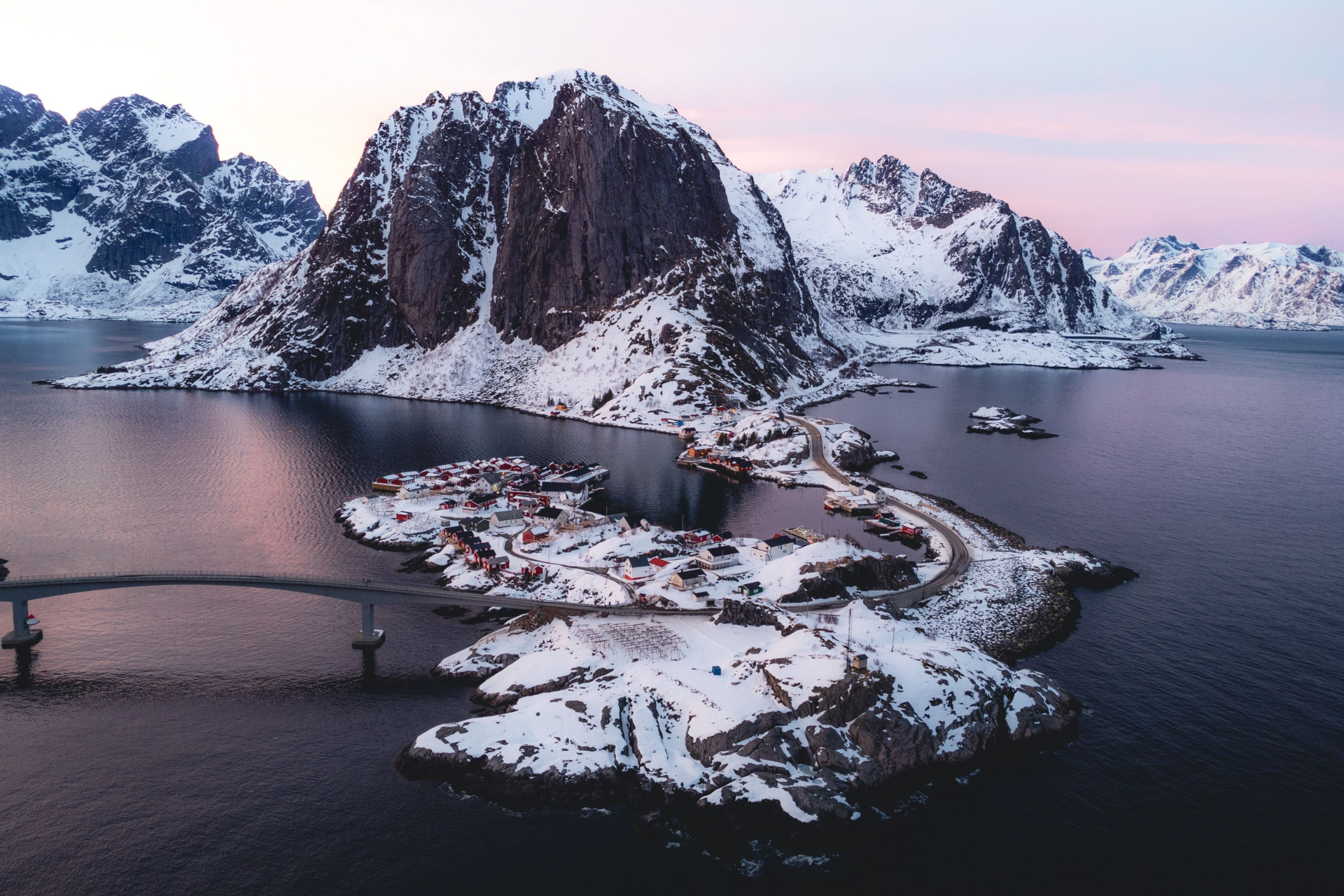 Together, Norway and Finnish Lapland create one of the most complete Northern Lights journeys in the world. Norway brings fjords, mountains, water, and Arctic city life. Finnish Lapland brings snow, silence, Sámi culture, reindeer, saunas, and the deep stillness of the far north.
Tromsø is the natural anchor for the Norwegian portion of the journey. Small, walkable, and surrounded by fjords and mountains, it offers excellent aurora guiding without losing its sense of place. A Northern Lights sailing from Tromsø is one of the most affecting ways to spend an evening in the Arctic: the boat moves away from the city’s ambient light, the mountains disappear into darkness, and if the aurora appears, it reflects faintly over the water.
Days can be filled with dog sledding, snowshoeing, whale watching, and snowmobiling, but Tromsø does not need to be over-programmed. Part of its appeal is that the wilderness remains close. The northern landscape is always present — in the harbor, beyond the windows, at the edge of town.
From there, Finnish Lapland changes the tone. The accommodations we favor are intimate, remote, and deeply connected to the surrounding landscape. In the right hands, the experience can include time with Sámi reindeer herders whose relationship to the land is generational rather than performative. The best moments here are not staged. They are windows into a way of life shaped by winter, snow, animals, and silence. Two nights is often the right amount of time: long enough for ice fishing, a reindeer-herding experience, a private sauna, and the kind of aurora vigil made considerably more civilized by a warm place to retreat.
The Legacy Untold Travel creates bespoke journeys for travelers who want to experience something genuinely extraordinary — in the sky and on the ground. To begin planning your own Northern Lights expedition, visit www.thelegacyuntold.com/travel/ or reach out to our team at [email protected].